Katherine Leung
Vermont artist making art about identity and ancestral longing

Kneading Dough
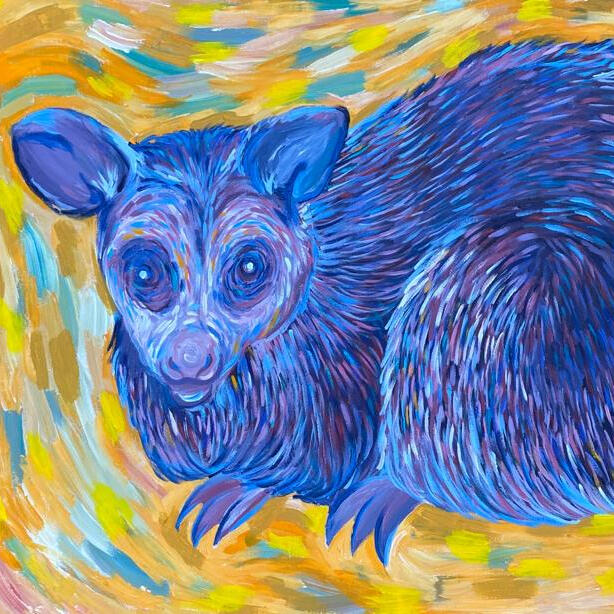
There is magic in simply existing

Chinese Names

Beautiful Vermont

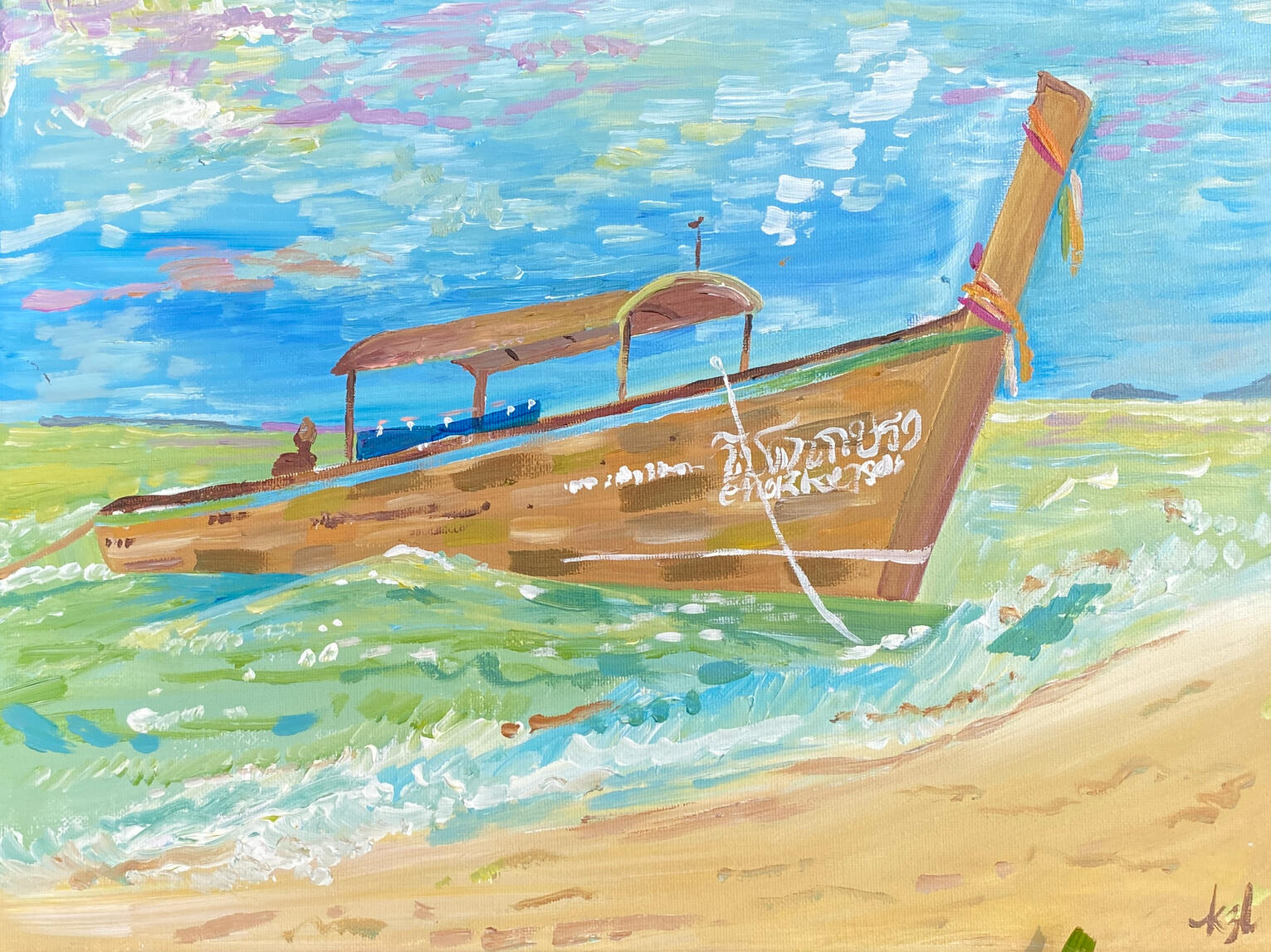
Scenes from Thailand

Asana

Youth Climate Justice Activists

Kristallnacht

Lifelines

Collage

Sipping Vita
Plombir Nostalgia
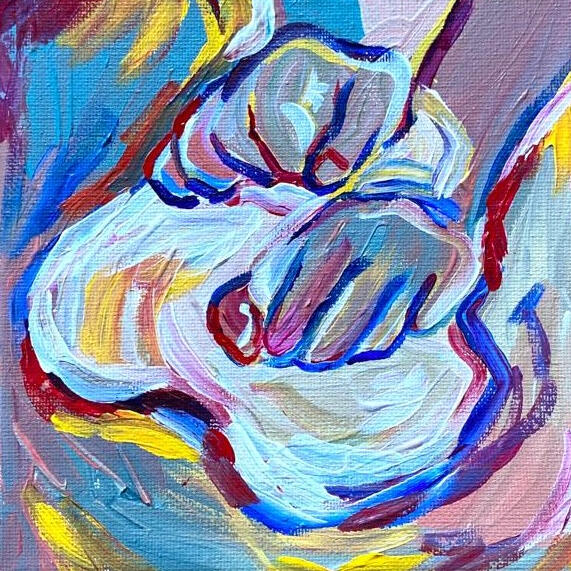
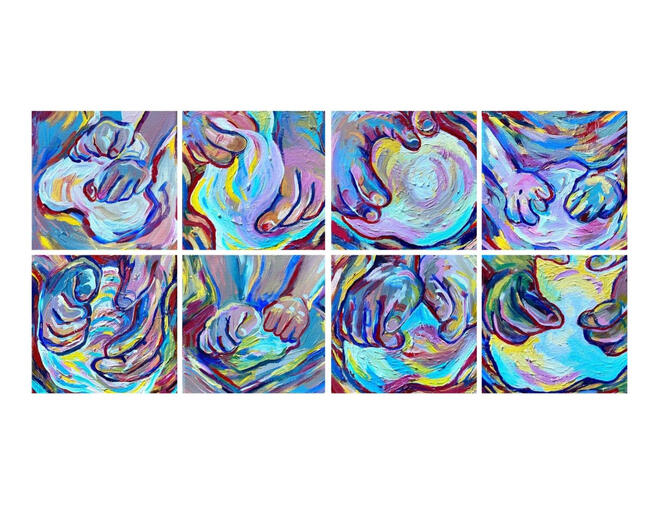
Kneading Dough
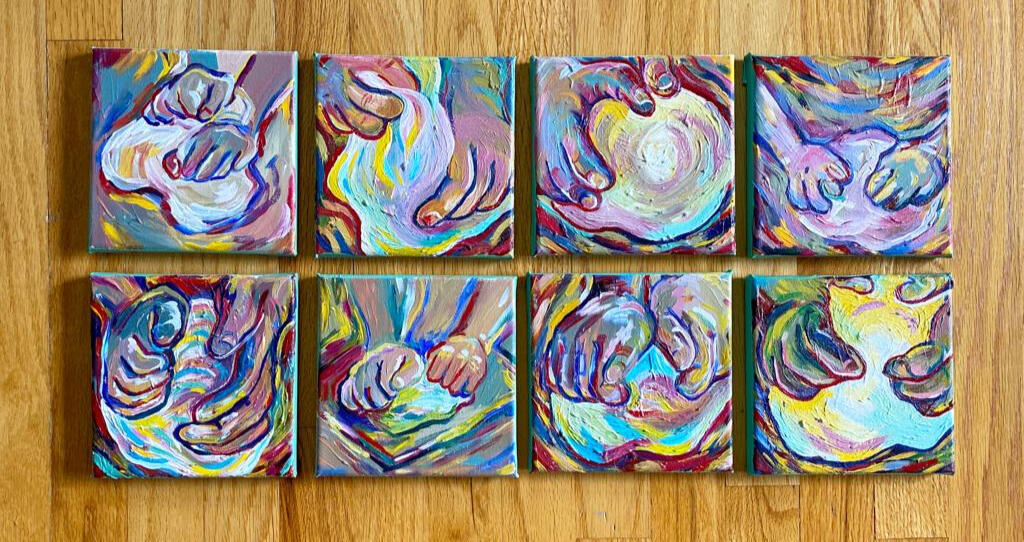
Like many millennials, I learned to maintain a sourdough culture and proof bread during the first months of the lockdown. March 2020 was the first time in a long time I got to think, create, and exist without the crushing weight of going to work. I feel lucky that the pandemic brought me introspection instead of misery like it did for so, so many.The routines I started during that time are now traditions. I make dumplings by hand, pita and frybread, tortillas for breakfast, hemantashen for Purim, pizza and apple pies. Kneading dough is a connection to the practices of the people before me, but also to everyone else experiencing catharsis and discovering self-love during isolation.


There is magic in simply existing


The changing of the seasons is a dance of transformation, a magical procession that weaves through the cycle of life and death. Magic does not override biology, but rather coexists with the unique joy that comes from being alive.Possums embody this enchantment for me. The patter of their small feet scurrying across the forest floor, their patchwork quilt of coarse hair and sinewy tail make this creature appear otherworldly. Their giant black eyes seem to gleam with an imagined mischief. I’m captivated by their larger-than-life presence, which has followed me from Texas to California and now to the mountain forests of Vermont.Possums are North America’s only marsupial. Their personality is preceded by folklore – possums carry their babies on their back like a cartoon caravan, they “scream”, they play dead. In culture they are maligned, rumored to carry rabies, often viewed as pests.Recently, the enigma of possums is captured in memes passed around on the internet. Possums occupy a special place in our world, both as something humans can relate to on an emotional level, but also for their uncanny primal energy, a reminder of the untamed and mysterious forces that surround usI’m inspired by the natural world in Vermont and the digital illustrations of Sophie McTear, a queer artist based in Tucson. McTear’s work utilizes LGBTQ+ imagery to evoke themes of self-worship in nature, often featuring intergalactic motifs alongside woodland fauna such as frogs and bats. McTear’s illustrations celebrate resilience during a time of systematic dehumanization of the LGBTQ+ community. From McTear’s work, I’ve adopted the phrase “There is magic in simply existing”. For marginalized people and maligned natural creatures, they possess a beauty all their own, reminders of endless variety and wonder in this world.


Chinese Names
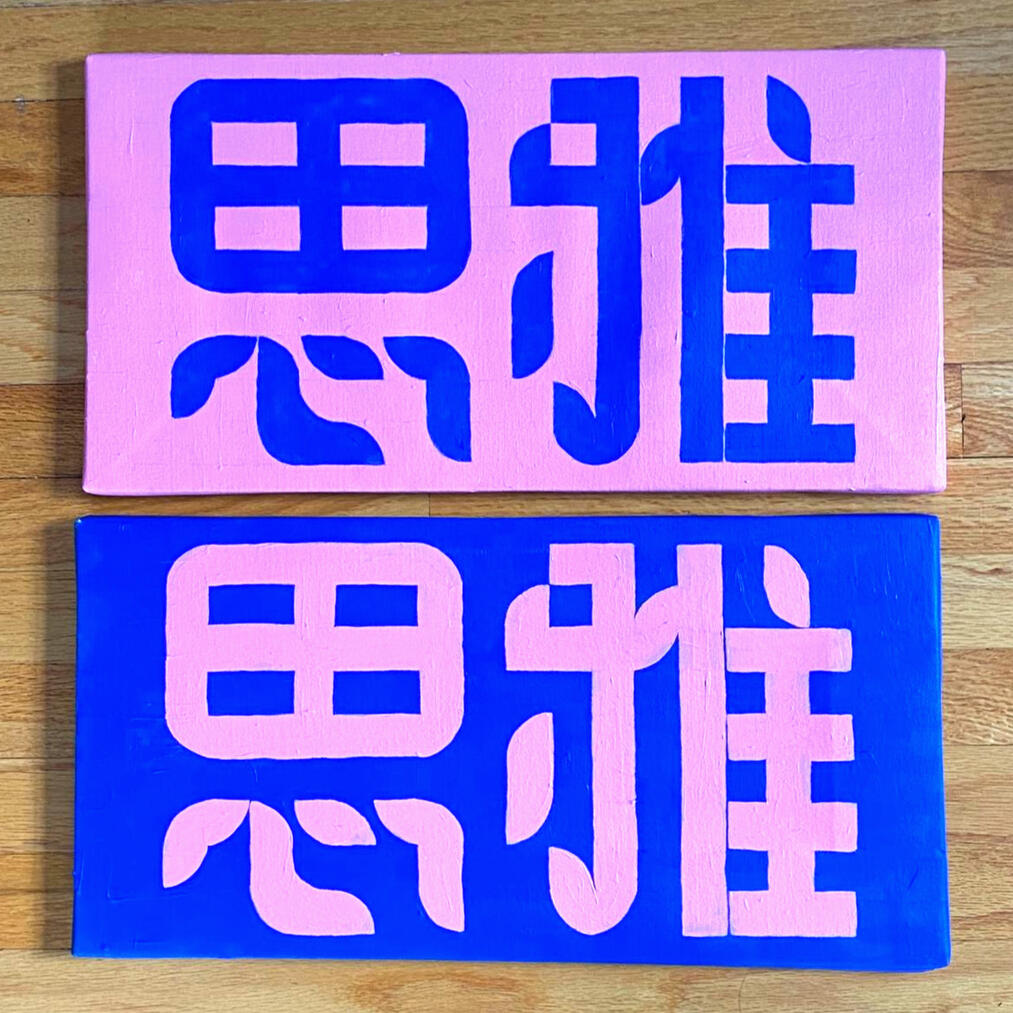
My daughter’s middle name is Senya, which is an anglicization of her Chinese name, 思雅 (Si1 Ngaa5). The name means “refined thinking” or “elegant thoughts”.My middle name is Zeahan, which is also a phonetic approximation of my Chinese name, 倩行 (Sin1 Hang4). I love telling the story of my name. My parents were originally going to use Sheehan as a middle name, but my uncle Henry said it sounded too much like shit head. So Zeahan it was.In spending nine months thinking about my daughter’s name, I grew more proud of my own. Both our Chinese names were chosen by my grandfather, my daughter’s great grandfather.
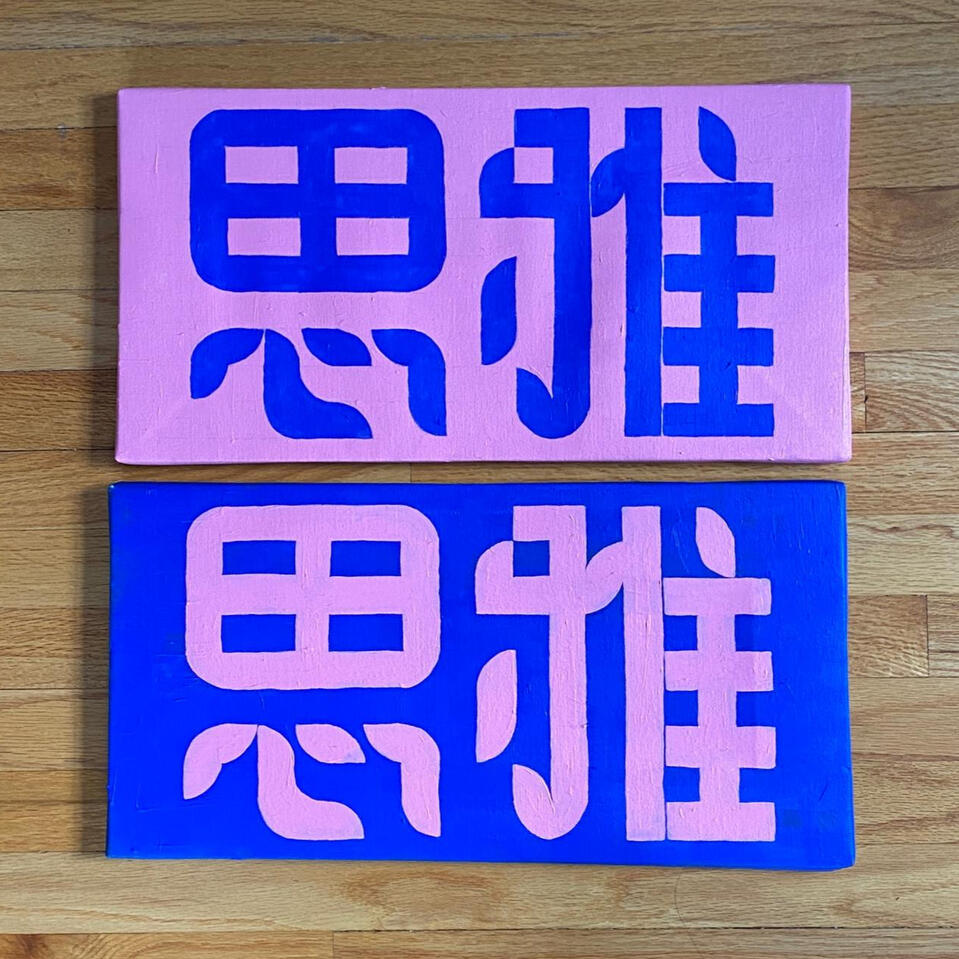
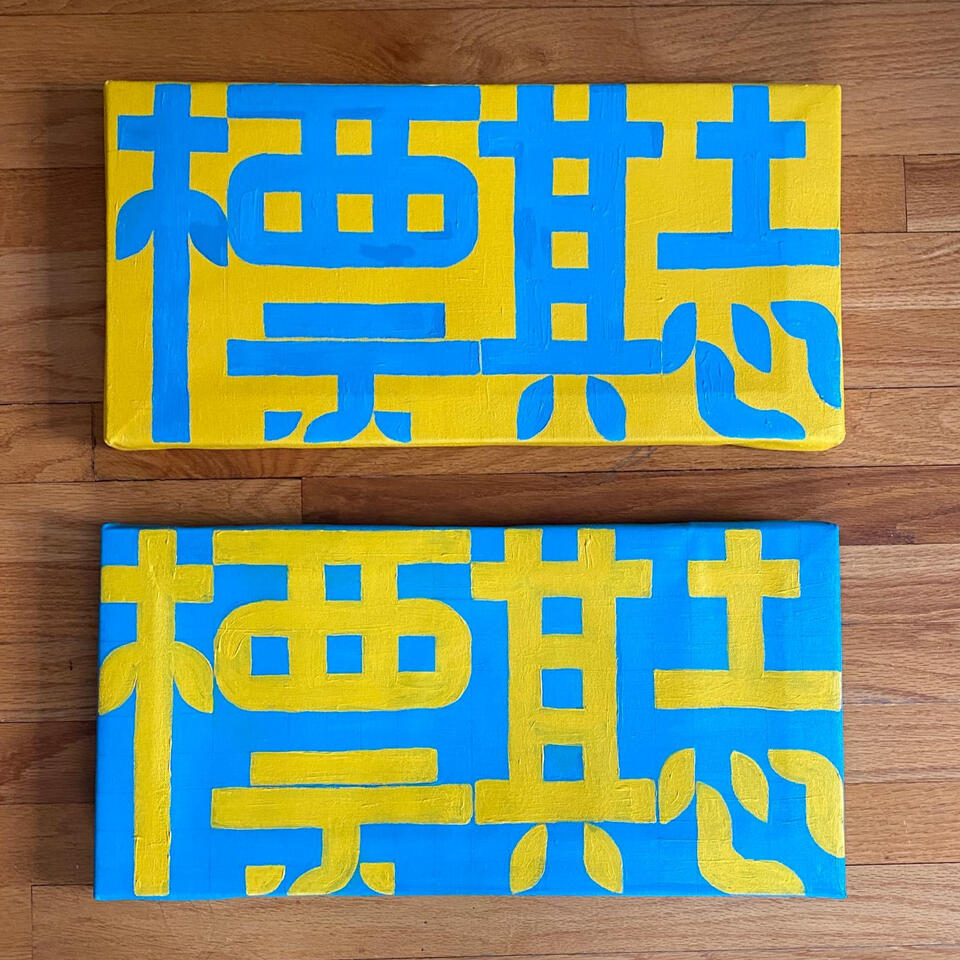
Before my daughter was given a Chinese name, my partner, Casey had to receive one first.Casey’s last name is Primeau, pronounced Pree-mo. At first, my grandpa chose 漂流 (piu1 lau4), which means drifting. We didn’t like that connotation. So he revised it to 標苗. Biu1 Miu4 sounds a lot like Primeau and it was shortened to just 標 (Biu1) to be less Western. Most Chinese family names are just one syllable. 標 (Biu1) on its own means seedling or sprout and it has become my daughter’s Chinese family name too.
The first full name that my grandpa gave Casey is 標棋士 (Biu1 Kei4 Si6). This was chosen based on sound and characteristics. 棋士 (Kei4 Si6) sounds like Casey and also means chess scholar. He does play chess, though not professionally. The main quality he wanted to capture was Casey’s intelligence.My grandpa revised it to the final form, which is 標其志 (Biu1 Kei4 Zi3). 其志 (Kei4 Zi3) means to declare one’s ambition or set forth one’s aspirations. It’s said to be a classical and literary name.I don’t read Chinese but I thought it was important to have my grandfather name the next generation just like how he decided my sisters’ and my names.Since I can’t write Chinese I felt a lot of imposter syndrome creating these works. Who am I “performing Chinese-ness” for? I’ve struggled with being perceived as more or less Asian my entire life. As I partake in “Asian” activities I feel like I’m fetishizing myself based on what little I do know about the culture.But now that I’m a mom, I realized I don’t have time to be self-conscious and I better learn how to write my daughter and husband’s name from memory. These works are a way for me to reclaim Chinese writing.
Beautiful Vermont
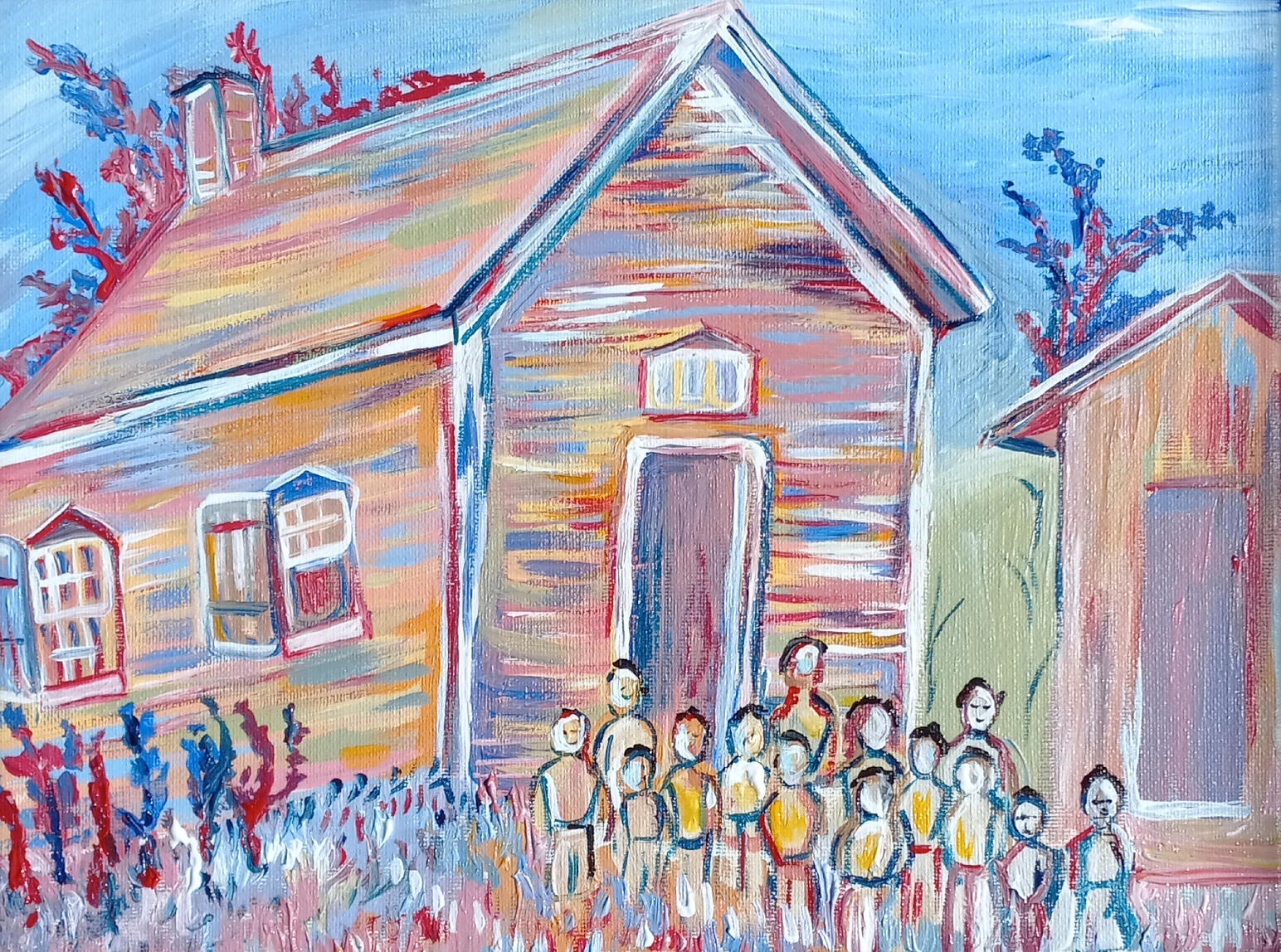
I recreate black-and-white photographs of historic Vermont to reflect the natural vividness I am surrounded by while living in this quiet yet proud corner of the US.


Printed in Magnificent Milton 2022 Calendar by the Milton Historical Society. Sold.


Part of Historic Swanton group show, by the Swanton Historical Society. Sold.


Charlotte historic district, created at Deborah Kehoe studio.
Scenes from Thailand


These acrylic paintings were created for Aung’s Thai Massage practice in Essex Junction, Vermont.
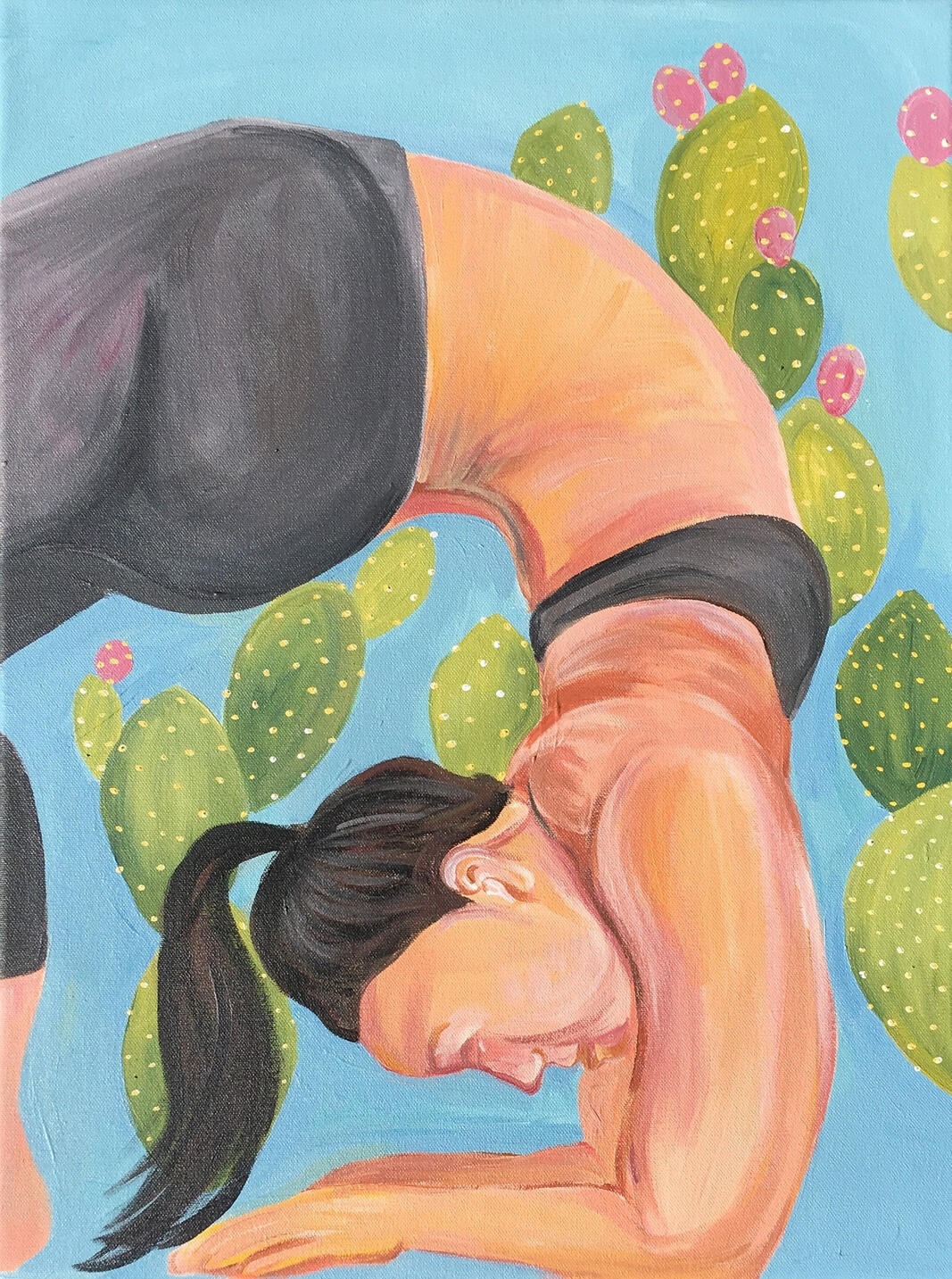
Asana


Asana is a series of self-portraits created from actual photos of myself in various yoga poses. Asana is the Sanskrit word that refers to posture. Western yoga practices, exemplified by fitness influencer culture, focuses more on the picture-perfect strength and gymnastics aspect of yoga instead of the corresponding meditative and spiritual practice. As an Asian-American in an Western country, I’m constantly struggling with cultural purity and authenticity, as I have the unearned privilege to explore these questions in both my art and body.I received my yoga teacher training from someone in the dominant culture, in English. Throughout the training, I saw parallels to my own Eastern beliefs, some which I never identified were truly “Eastern” beliefs having grown up isolated from Hindu and Buddhist-aligned schools of thought. At the same time, I also found myself picking and choosing which beliefs I align myself with, as with any yogic student. I also realize the industry of certifying yoga teachers through a heavy-rotation of cohorts is a million-dollar industry in the West, propped up by neocolorblindness and cultural appropriation. I’m a part of that industry, though like many others, I am seeking cultural purity and a sense of what is authentic and real to me. Philosophy is almost like the final frontier in settler colonialism. Perhaps my exploration is an exploitative act. Indeed, the entire experience is a self-serving act.Many people turn to Eastern philosophies to find themselves, and as an Asian-presenting practitioner of these ideas, I find my experience even more textured, as it coexists with contemporary ideas of “self love”. My upbringing in the magical realistic landscape that is the Southwestern desert, my appreciation for my own physical body, and my experience in both teaching and practicing yoga all contribute to ongoing dialogue about how students can come to Eastern philosophies in genuine ways.


Youth Climate Justice Activists


You can download high-definition printable posters of these graphics at Just Seeds.From left to right:Autumn Peltier (b. 2004, @autumn.peltier) is a Canadian First Nations water protector that has spoken at the United Nations and Assembly of First Nations. She is the chief water commissioner of the Anishinabek Nation.Jerome Foster II (b. 2002, @jeromefosterII) is a climate activist that helped to organize climate marches across the Washington, D.C. area and spoke at the United Nations High Commission on Human Rights in April 2019 and the United Nations Youth Climate Summit in September 2019. He also is the director of OneMillionofUs and a reporter at The Climate Report.Leah Namugerwa (b. 2005, @NamugerwaLeah) is an Ugandan climate activist that organizes school-based Fridays for Future Uganda and speaks out about climate injustice. She's currently leading a petition to force the Ugandan President, Yoweri Museveni, to turn an announced plastic bag ban into reality.Vic Barrett (b. 2000, @vict_barrett) is an Afro-Indigenous climate activist and has joined a lawsuit with 20 other young people suing the U.S. Federal Government for violating young people's constitutional rights by developing and encouraging fossil fuel infrastructure and use.Isra Hirsi (b. 2003, @israhirsi) is an Africa-American climate activist and coordinated the organization of hundreds of student-led strikes across the United States. She co-founded the U.S. Youth Climate Strike, the American arm of a global youth climate change movement, in January 2019.Xiuhtezcatl Martinez (b. 2000, @xiuhtezcatl) an indigenous-Latinx climate activist that has given numerous talks in front of the UN in English, Spanish, and Nahuatl. He is a hip hop artist and the youth director of Earth Guardians, a worldwide conservation organization.Xiye Bastida (b. 2002, @xiyebastida) is a Mexican-Chilean climate activist and a member of the Otomi-Toltec nation. She organizes Fridays for Future New York City and serves on the administration committee of the People's Climate Movement and a member of Sunrise Movement and Extinction Rebellion.
Kristallnacht


Kristallnacht (Night of Broken Glass) is a Jewish pogrom carried out by both paramilitary and German citizens on November 9, 1938. Some recognize it as a singular night where over 7,000 businesses, schools, homes, and synagogues were specifically targeted; but I see it as a decades long trajectory of when lives aren’t valued. Then their belongings, their businesses, their safety, their creations are worth even less.Broken glass is a phenomenon we still know very well, a product of when racism is left unchecked and permeates every institution in society. Racism is engrained in authority.When we see images of the aftermath of riots past and present, we recognize broken windows as a recurring motif. It’s an image burned into our collective nightmares. What is more difficult to consider is the chain of events that led to those jagged, glass shards. That is a more difficult conversation to have, especially with people who were (and are) complacent with dehumanizing others.Speak out when you see authorities oppressing people. Broken windows are only the beginning.Paintings based on photographs of the aftermath of Kristallnacht in Ahaus, Baden, Berlin, Munish, Munster, and Vienna, from US Holocaust Memorial Museum archives and Yad Vashem World Holocaust Remembrance Center archives.


Sipping Vita
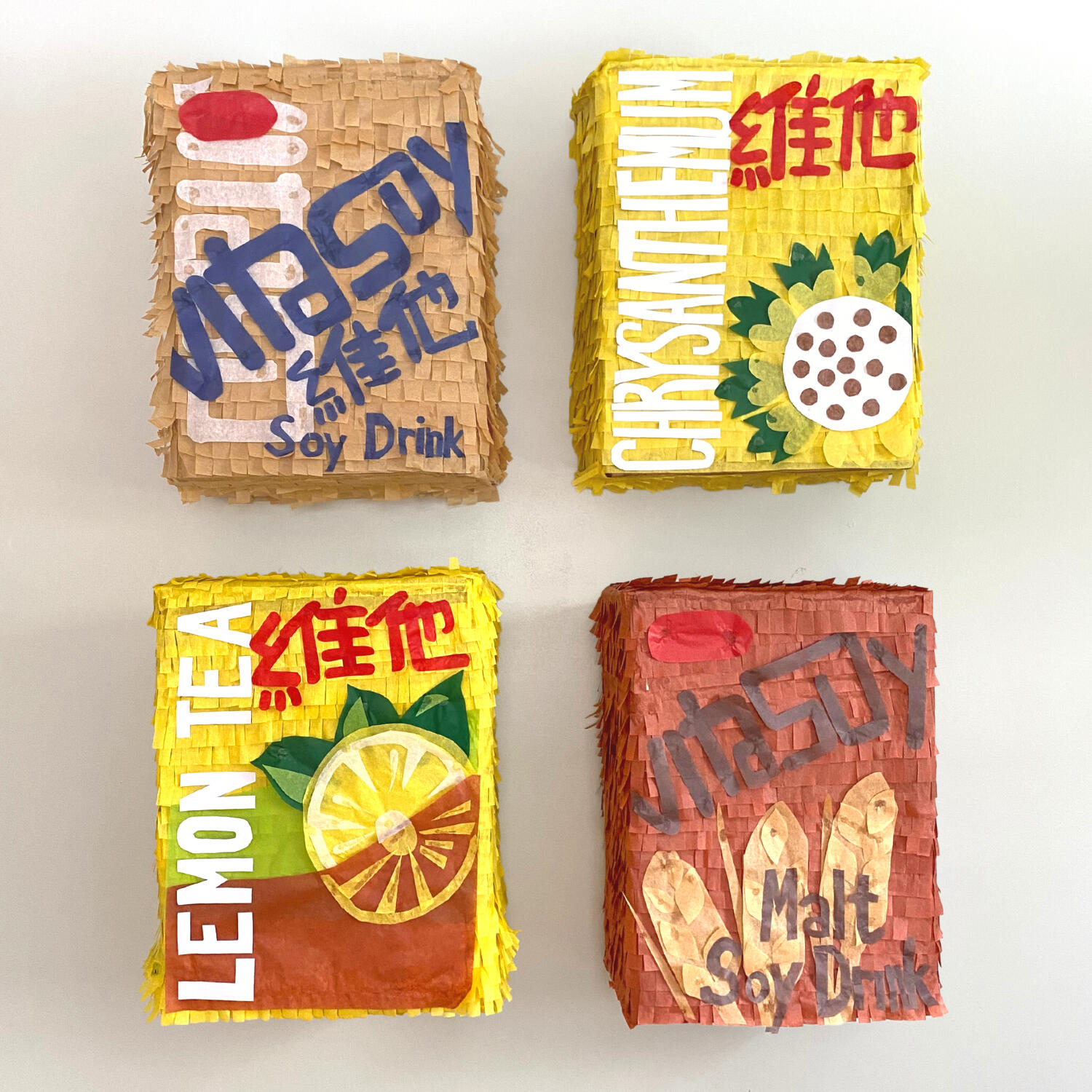
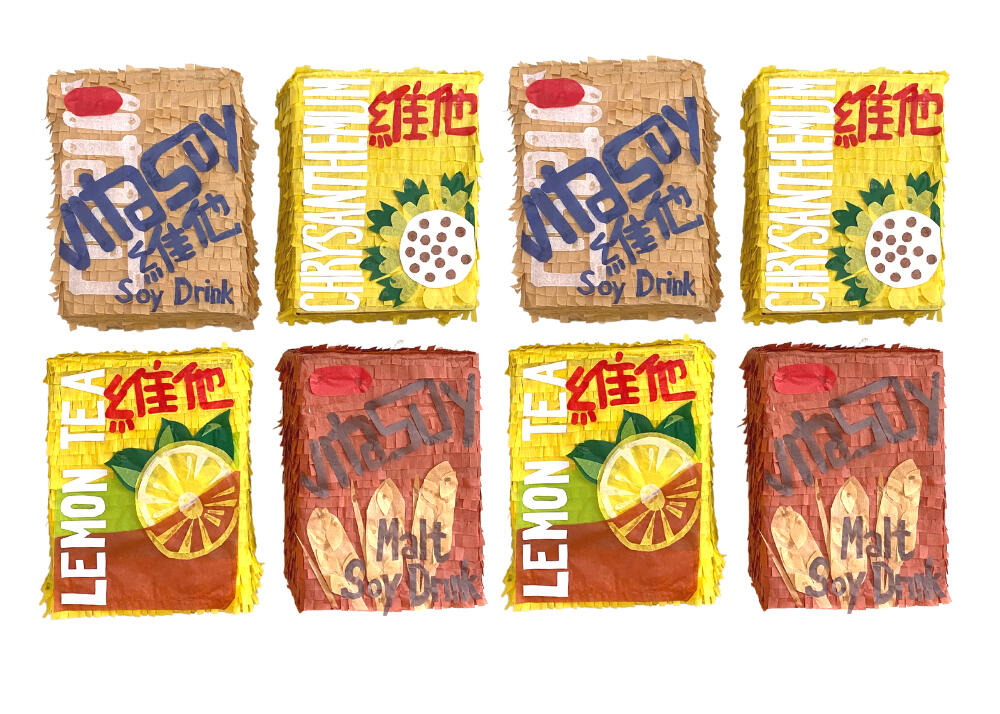
Sipping Vita is a visual diary and celebration of childhood in two worlds united by common objects and tastes. Part of my childhood takes place in backyard pool parties followed by Eegee's frozen piña coladas and piñatas amongst the backdrop of sweltering Tucson and Austin. These memories are juxtaposed by cozy meals nestled in busy alleyways "dai pai dong" style in the dizzying urban expanse of Hong Kong.Vita juice boxes can be found in any HK corner snack bar and is a staple in any immigrant owned grocery store in the Southwest of United States. These piñatas tie my memories together by the potential for a celebration, a nostalgic explosion of familiar flavor on my tongue, and the instant transformation towards reminiscing and longing for a time when life was more simple. Vita is a Hong Kong-based brand, recognized worldwide, and a constant symbol of what little I carry of my parents' culture as a first generation American, especially amidst the turmoil of the 2021 international uprisings following the sedition act and Umbrella Movement.The physical act of creating each piñatas by hand and the folk-art labor intensiveness is an act of ancestral memory, of my family's legacy as immigrant grocery store owners in the 60's an 70's. Their journey brought me here and I taste their memory with appreciation and respect.
Plombir Nostalgia
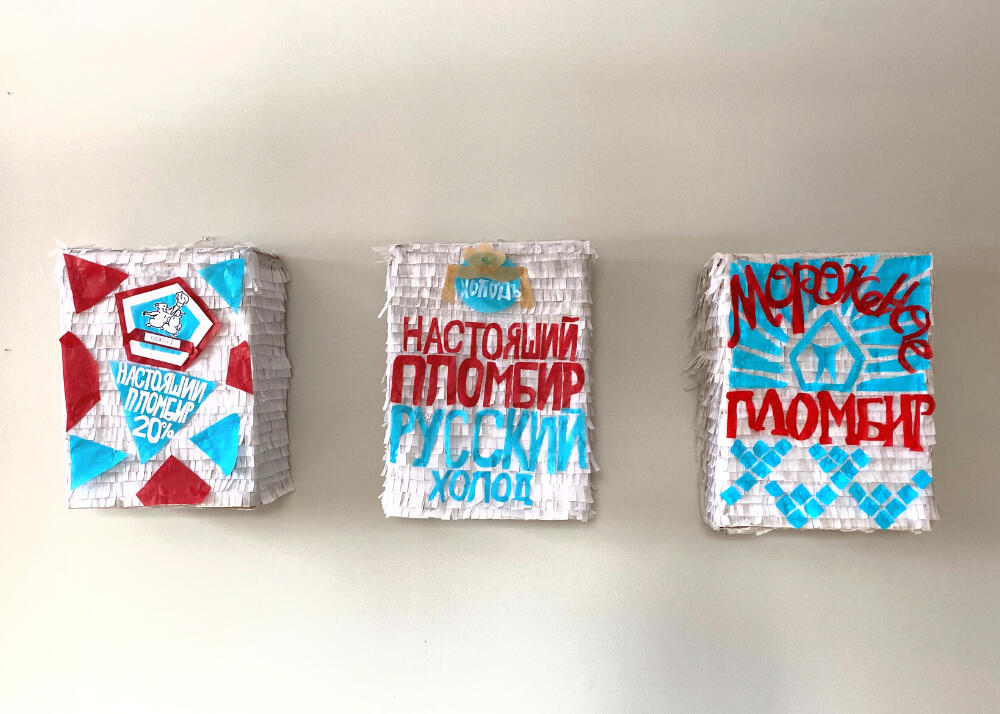
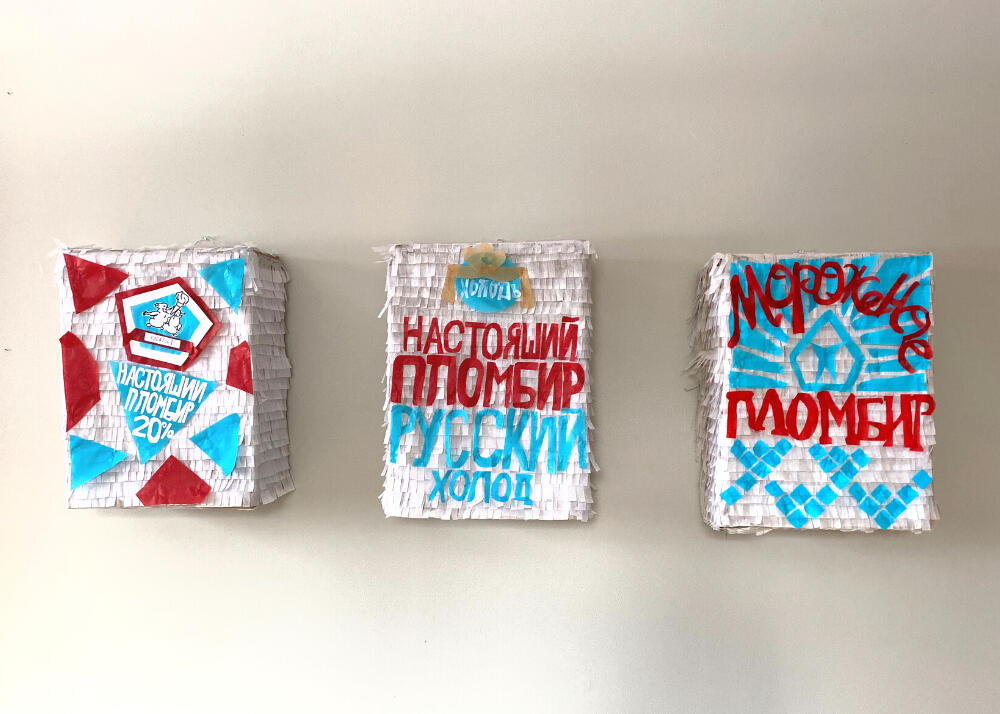
Plombir (plombière) ice cream bars were wildly popular in the Soviet Union. Based on an original French recipe and reminiscent of the Napoleanic era in its namesake, it was just one of many foods inspired by French haut-cuisine that gained popularity during the Soviet period.Plombir was made of cream, milk fat, eggs, almond extract, and sometimes brandy. There were laws and governing bodies ensuring the freshness of the ingredients and the specificity of the manufacturing process. Many companies that made Plombir retained their nostalgic packaging, which reminds older folks of a more positive time.
Collage
Mushrooms
The first two collages were created for the release of Our Ancestors Want Us to Be Mushrooms by Madison Murphy Barney.
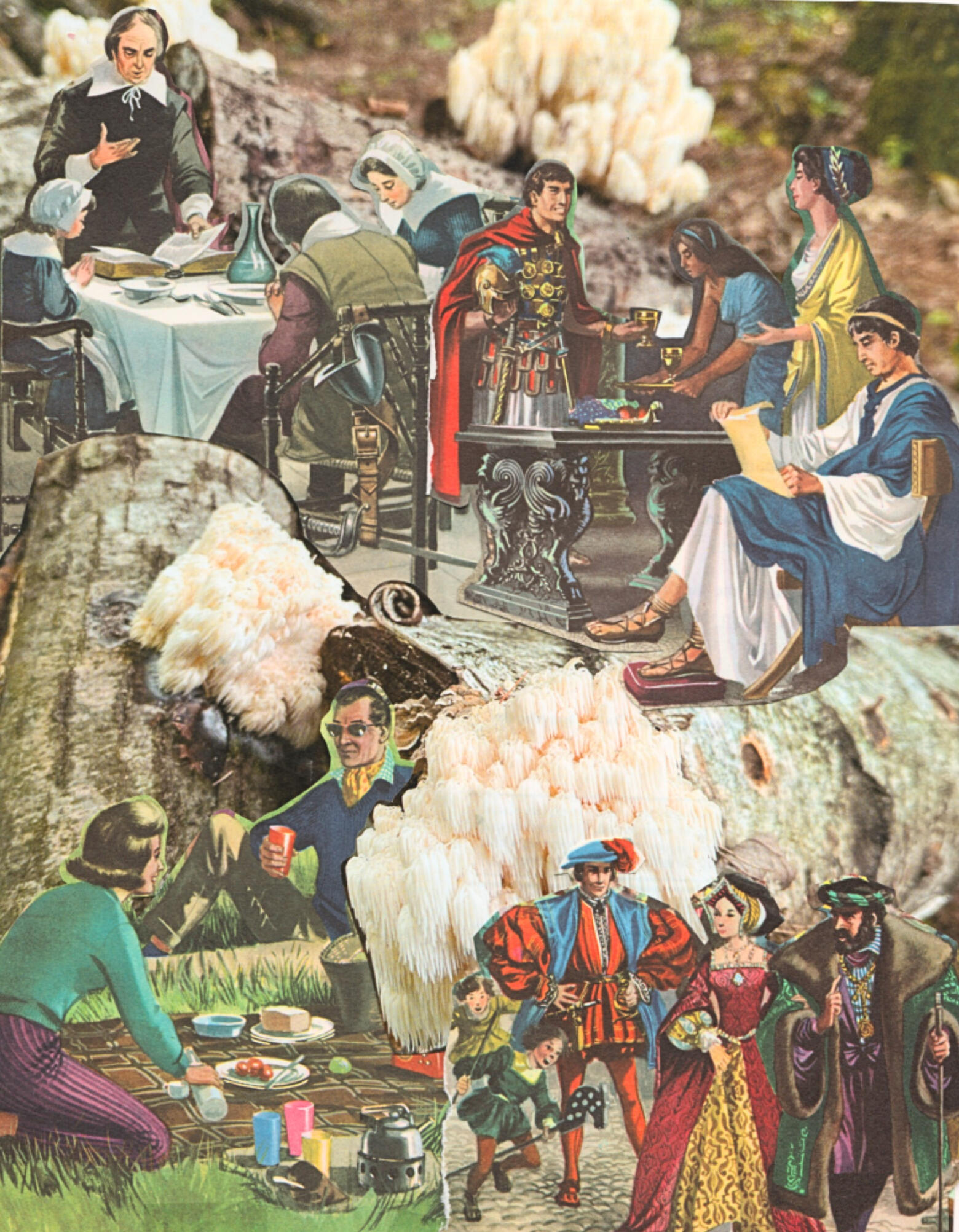
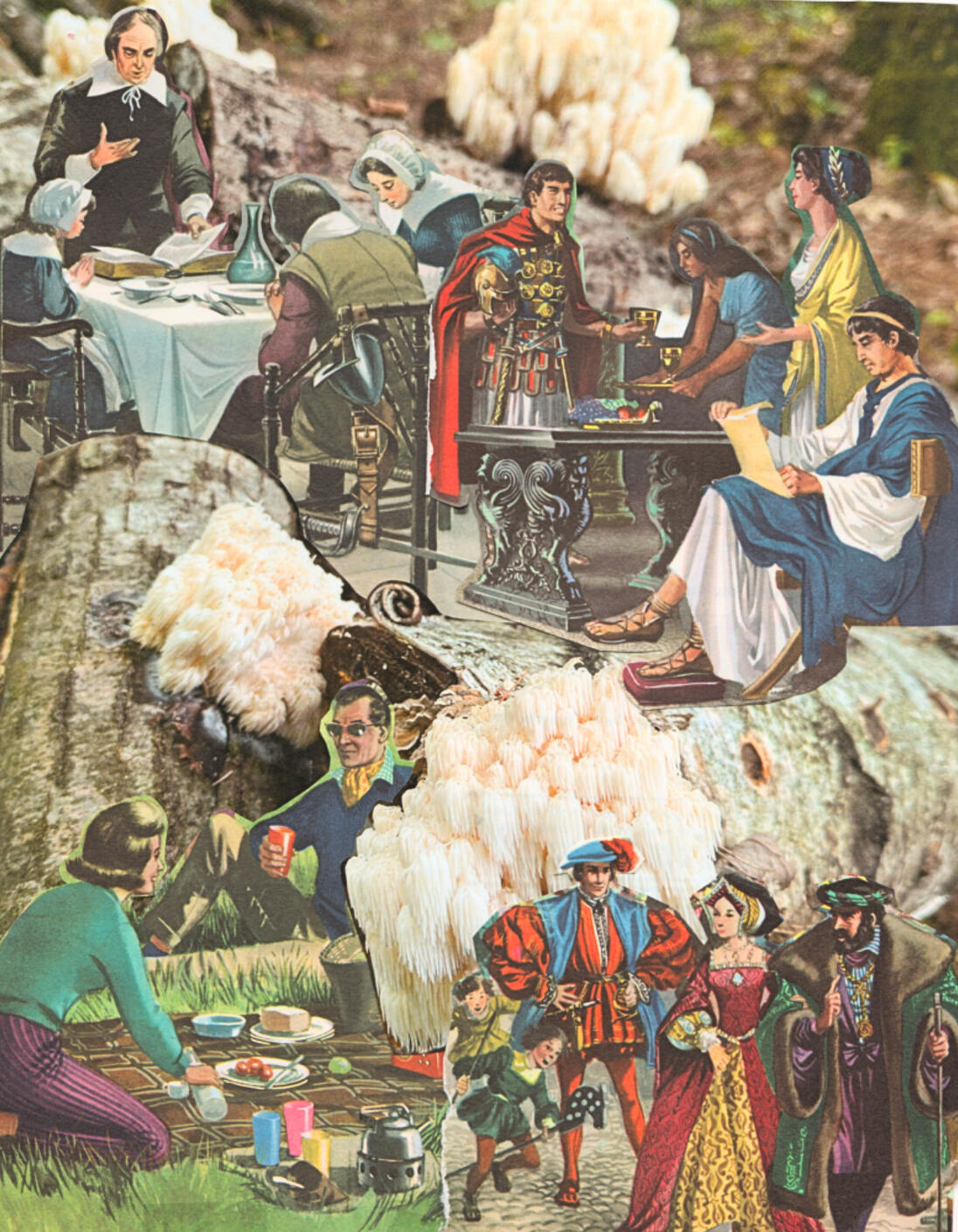
Hericium, 2026This collage juxtaposes historical images of class and gender roles with Hericium, a mushroom that grows without the stem-and-cap hierarchy of most fungi. I question the arbitrariness of the systems we treat as fixed.
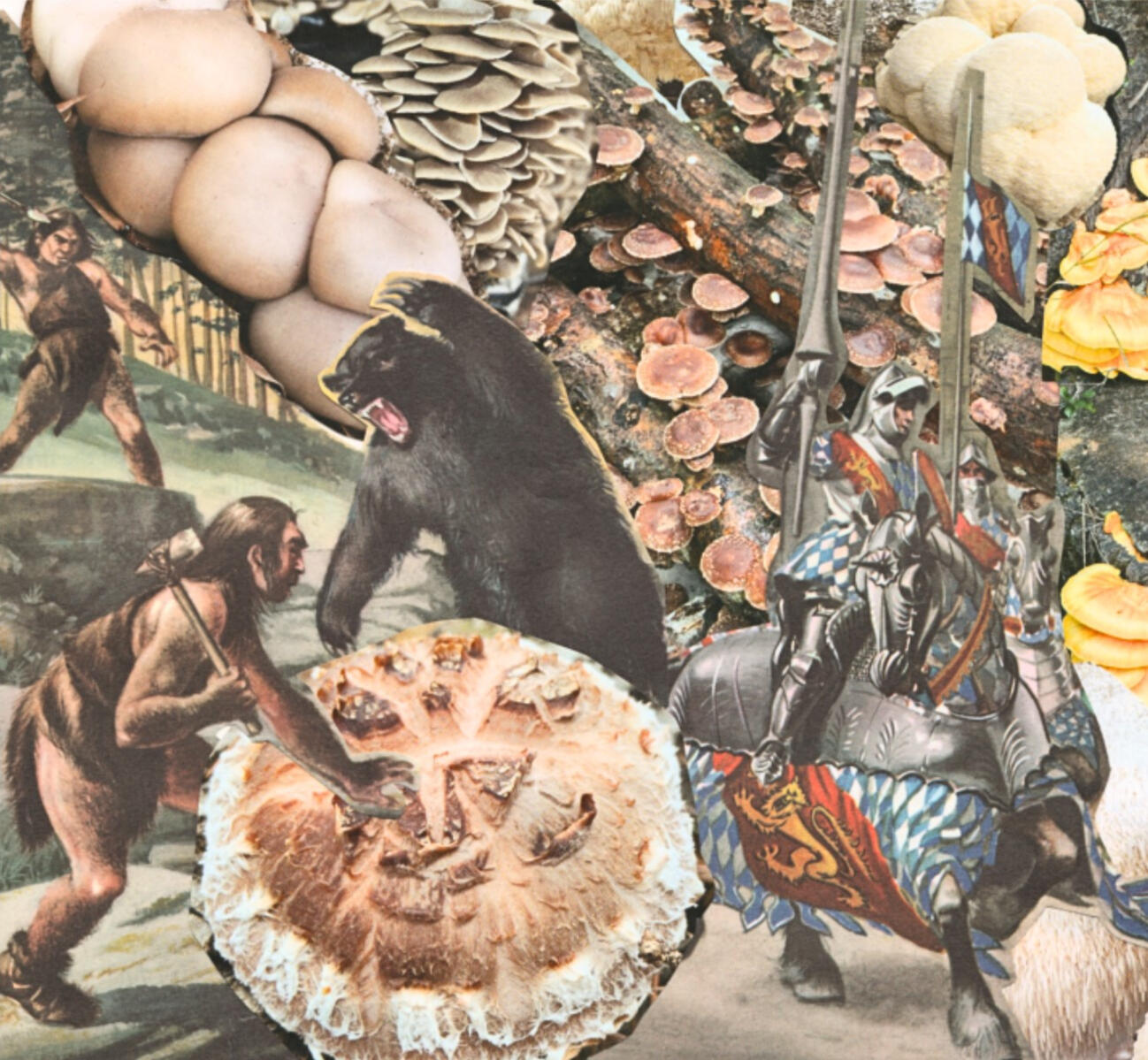
Fighters, 2026This collage sets fighters from distant eras against a persistent field of mushrooms. Both belong to civilizations that rose and vanished; the fungi around them survived unchanged. I think there's beauty in knowing war, conflict, and suffering will not outlast us.


5787 Jewish Feminist Poetry & Collage Calendar
13 month calendar featuring analog collages and poetry from Bridges (1990-2011). Bridges was a Jewish Feminist Journal connected Jewish feminist writers, activists, and artists with each other, and with various public forums, for more than two decades. The collages combine Matisse’s early works showcasing ordinary women (often sex workers), Mexican textiles, and mushrooms.


Boreal Zine
These two collages were created for Issue 23: Interstitial.


Presidental collages
This project will be unveiled soon!


Still Pecking
This series was created for Art of the Coop, a group exhibition at the Milton Artists' Guild September 2 - 28, 2026.


These collages take black-and-white press photographs of twentieth-century catastrophes and place a chicken at the center of each, scaled to the size of the event. The aerial views and the burning streets insist that this was the end of something. They taught the people at the time to look at its worst days as though those days were terminal.But none of these places ended. The cities were rebuilt, the water went down, the crowd went home. What looks in the photograph like an ending was just a singular event. I wanted to show chickens taking over, in a humorous way. Chickens belong to the oldest cycles of time and have lived in human settlements for thousands of years without once registering which century it is standing in.I know the effect is jarring. But I keep finding something hopeful in the presence of chickens. The chicken is the part of the picture that goes on: still laying, still hatching, still pecking around.
La Misión. La Cultura. La Lucha. La Gente.
This series was created for a project that hasn't been unveiled yet!


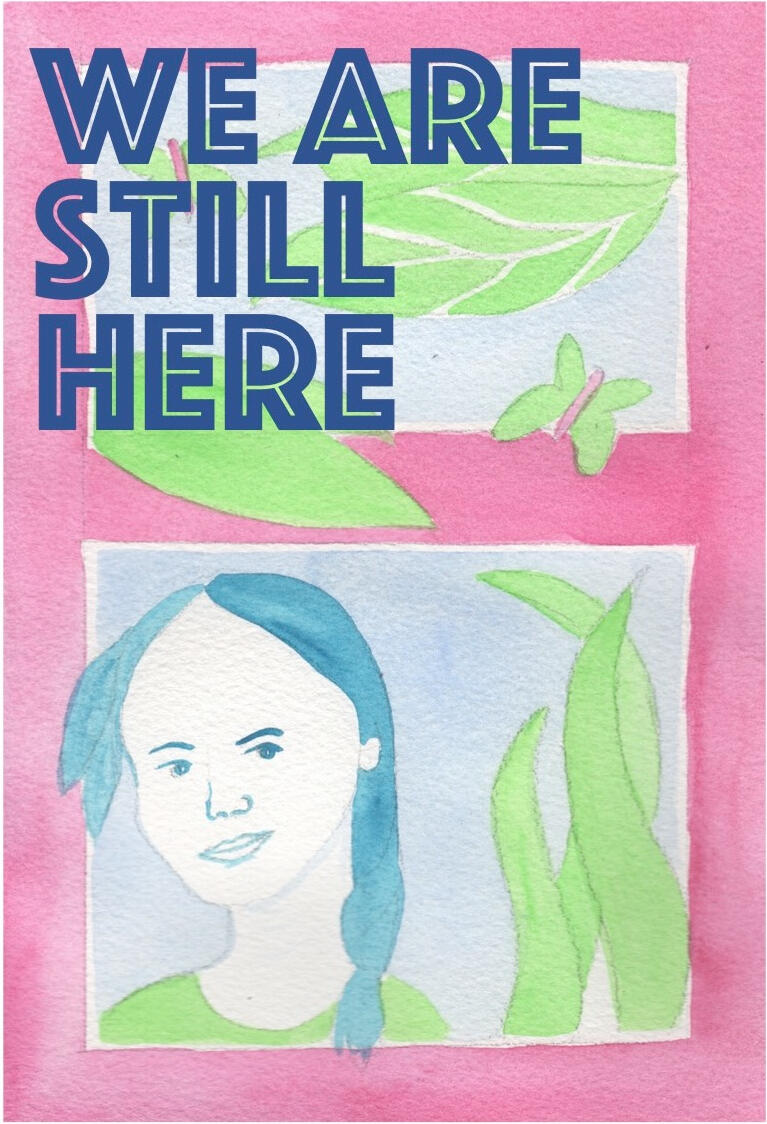
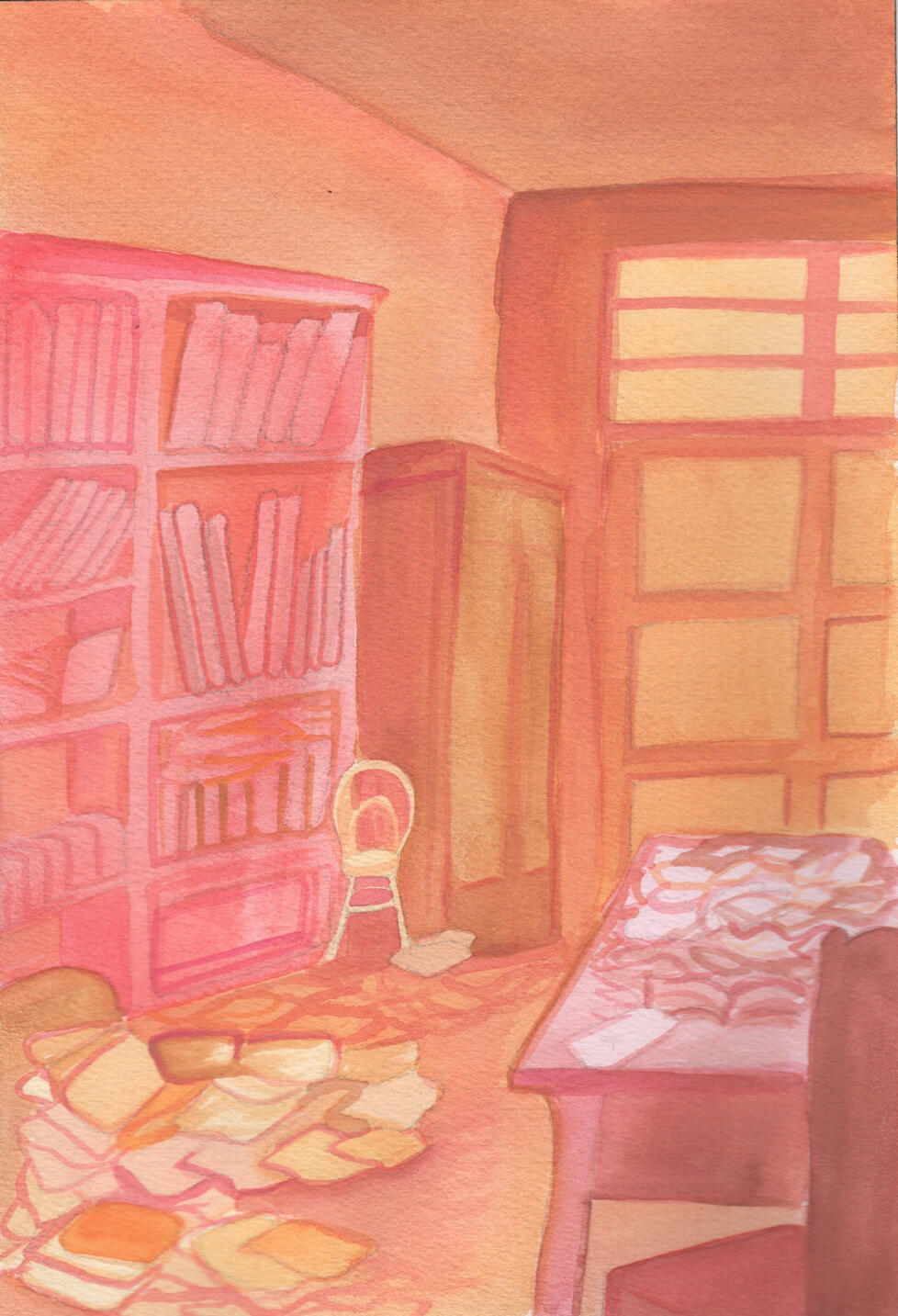
Lifelines
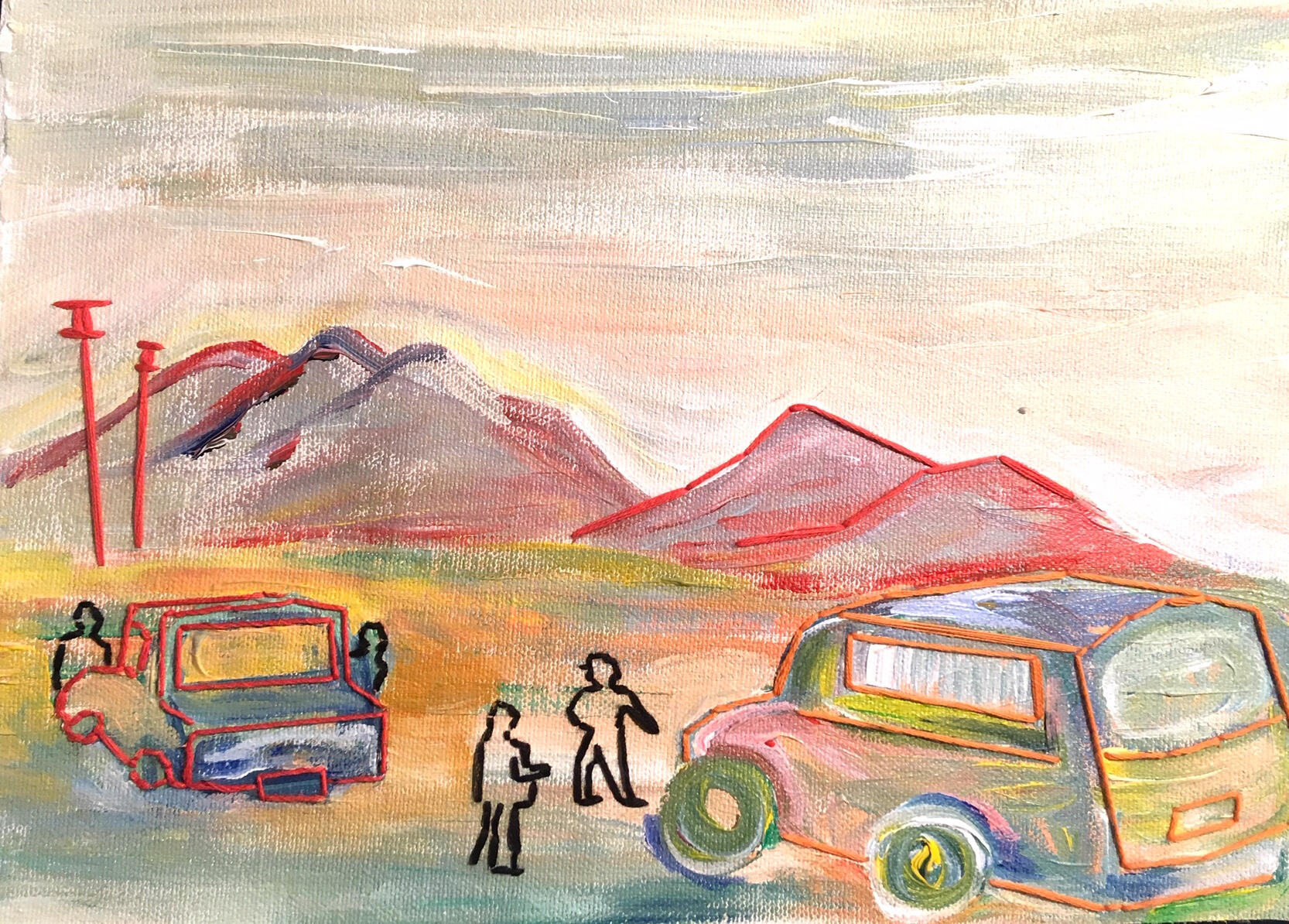
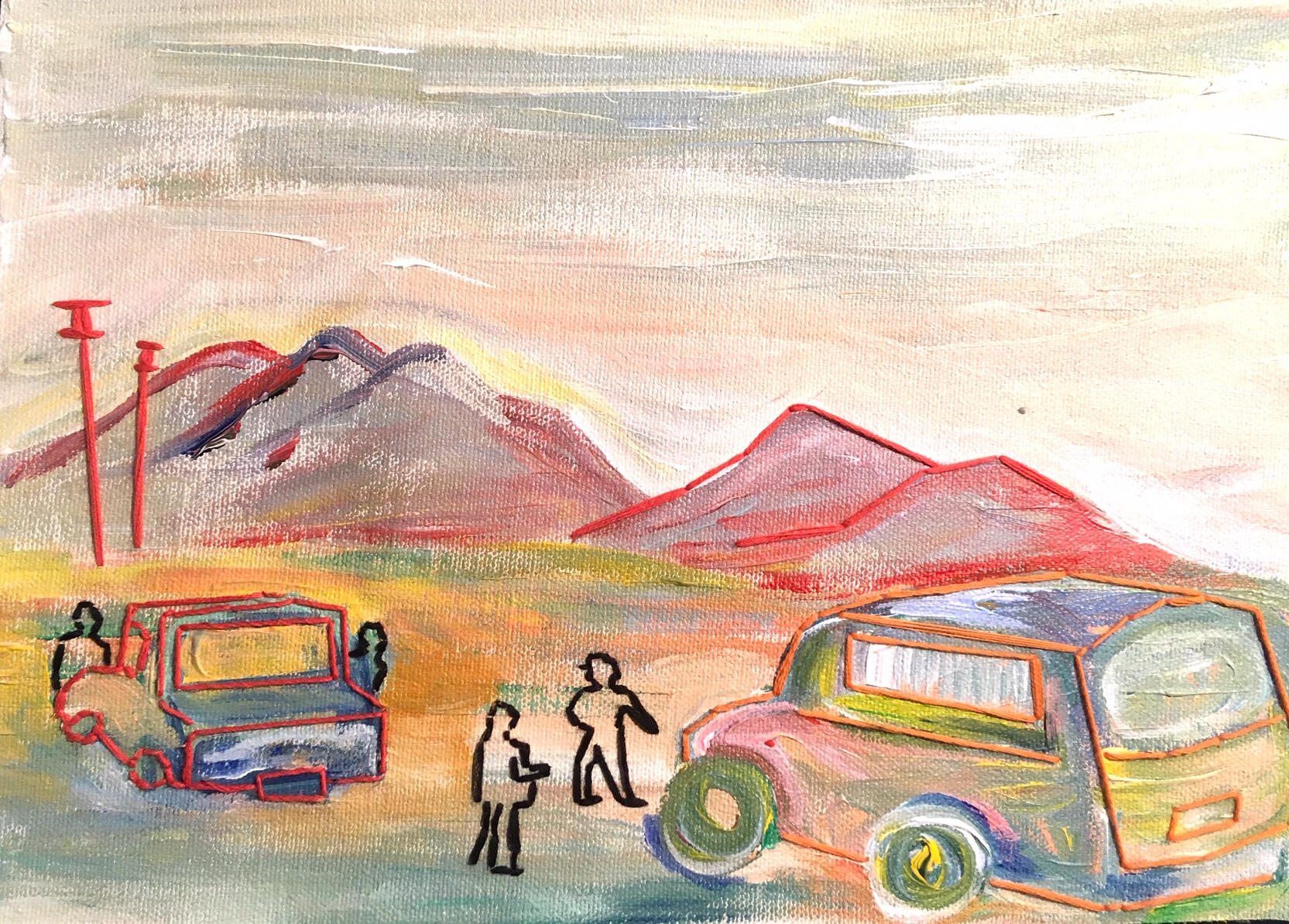
In 1942, the US government forced more than 110,000 Japanese Americans to leave their homes and live in military-style camps. The internment that uprooted families and tore apart communities was the result of racism, under the mask of supposed security threats, none of which were ever proven. Forced migration is not a new concept in US history. More than 100 years prior, the Indian Removal Policy forced over 60,000 Native Americans from their homeland, upon the same land the ten concentration camps are located.Manzanar, in Southern California, was the first Japanese concentration camp. Memoir "Farewell to Manzanar" (1973) by Jeanne Wakatsuki Houston and Ansel Adams' photographs of the camp (1943) have brought light of daily life at Manzanar.In incarceration, life goes on.In Lifelines, I recreated some of Ansel Adams' black and white film photographs of Manzanar, now part of the Library of Congress. Many of the photographs show farm work and recreation. The barren landscape is apparent and the endless empty skies isolate the subject, leaving the viewer with a sense of loneliness.I am inspired by the bold lines and natural palette of artist Henry Fukuhara, a Japanese American artist interned at Manzanar. I am also inspired by fiber works of Mexican artist Victoria Villasana, who used vibrant thread colors to trace signs of life.The humanity embodied in these stitches highlight the perseverance of all people, clinging to their humanity, in incarceration.


Faces of Central Texas


These paintings explore Asian American identity through the lens of Tuvan folklore. There are nine paintings from this series on display at the Asian American Resource Center in Austin, Texas October 4 – December 18, 2018.In 2014, the artist taught abroad at Samara State University in Samara, Russia, and then backpacked her way through Siberia and the Far East. In Siberia, she spent time working in Asian Republics, such as the Republic of Buryatia and the Republic of Tuva. For the first time, she saw reflections of herself while traveling. She had spent much of her travels explaining to people along the way that she was Asian-American and that the US had a wealth of Asian cultures but still identify as American.It was in Tuva, where she first did not need to explain herself. Tuva is an autonomous republic in the geographical center of Asia, located in south Siberia. Katherine worked in at a K-12 summer camp teaching English. Katherine felt a sense of belonging, as if Tuva had been an ancestral homeland. When interacting with the children, they frequently shared stories of their own folklore. Children believe and frequently shared that Tuvans descended from giant sun gods, which is why some children had hair that was gold in color. Children also believe they are the direct descendants of Genghis Khan. Blending folklore with reality was common practice among Tuvan youth and was a practice Katherine had not encountered in her many years of teaching.The stories that children shared inspired the artist to create these paintings, some based off of people she had met traveling, some personal friends. The narrative of certain individuals claiming lineage from ethereal sun gods or even Genghis Khan himself adds a facet to the ever-evolving, nuanced Asian-American identity. Katherine chooses to portray this concept through using vibrant and golden tones in skin. Faces commonly represent the medium in which we let others define us. We alter that story through tradition, folklore, and mysticism.
Haggadah


I created these images for a digital Haggadah for Passover 2020.To read the final Haggadah, click here.
Jewish Children


Even on my most stressful day working as a public school teacher, there is a sense of understanding with children. They have logical minds, they want things to be fair, for their world to be safe. They absorb and purely respond to everything around them. “Misbehavior” in a classroom is a trauma response.I recently took part of a teacher training at the Museum of Tolerance in Los Angeles. What spoke most to me while reactivating my knowledge of events surrounding the Holocaust were images of children wearing yellow badges with the Star of David. These yellow badges, sometimes arm bands, are markers that Jews were required to wear for legal status and survival in the European ghettos. Is there ever a symbol such a stark reminder of one’s devalued life – other than skin color? When I look at these yellow badges behind glass cases, preserved in archival photographs, all I feel is the polarizing power of oppression radiating off the cloth, how societies can just throw away human beings. It is even more demoralizing when I see a Jewish child wearing these markers – they’re just children, and to me, they haven’t done anything.These paintings are based on black and white photographs from the United States Holocaust Memorial Museum’s collection, many which were compiled by survivors and their families. The four photographs I chose to paint are of Jewish children living in Belgium, Lithuania, and Croatia, taken years 1941-1944. As they are black and white, they embody a different time, a different life, a different youth culture than what I know in 2020 – but perhaps not so different as children still pay the price in the relentless upholding of white supremacist institutions. I did not want to recolor the photographs. Instead, I wanted to light them up in flickering-like warm colors, to remind the viewer of a lit candle amidst in the darkness. Kids give me hope that things can be better and different, but at times like these they are especially vulnerable and subject to the current generation’s failures than ever.USHMM Collection Photograph Numbers if you’re interested in learning more: 56401, 06546, 10945, 88262


Kavkaz People and Flora


The Caucasus Mountains are home to over fifty ethnic groups as well as the world’s most unique and endemic plant species. I haven’t been to the Caucasus Mountains but I’ve spent time in both Russia and Turkey, and have seen the Caucasian influence on culture. The geography of the mountains is ingrained in the national imagination of both countries.Sergey Mikhaylovich Prokudin-Gorsky (1863 – 1944) is a Russian photographer that traveled the Russian Empire at the turn of the century in a railroad-car darkroom, taking some of the very first color photographs. The most captivating to me are his photos of the Caucases Mountains and Dagestani people in national dress. There is a different concept of “national dress” in Russia that would be considered ethnicization in the US. Dagestan is Russia’s most heterogeneous republic and frequently politicized. I try to educate and appreciate without romanticizing. Prokudin-Gorsky’s photos depict a rich culture worth preserving, marred by assimilation, unrest, and islamophobia.The struggle to preserve the traditions of indigenous ethnic groups mirrors the complexity to conserve the biodiversity in a threatened ecosystem. Connecting with people through ecology is difficult in our post-industrial world. We need to be routinely reminded that we inhabit a natural world. We restore our humanity, past and present, through preservation of the environment.These four portraits are recreations of Prokudin-Gorsky’s photographs, bordered by flowers, many which are restricted to the region, found nowhere else. Using flora and fauna as a way to learn and imagine how people interact with the world is radical, vital, and a return to the roots.
Uncanny 90's


Underwater


I grew up in both Texas and Arizona, and spent countless hours at the pool. My tenth birthday party was at Aquarena Springs, a natural spring and nature education center in San Marcos, Texas. It was understated, weird, but so very me. I’ve always been fascinated, not scared of water. Many of my dreams take place underwater.When I was in high school, I tried out for the swim team. Twice. I didn’t make it both times, which further complicated my relationship with water. Swim team was a traumatizing experience with strange characters, unattainable achievements, and prevailing white supremacy. Ever notice that the most well known stereotypes against people of color are that they can’t swim… or that they swam here? Besides that, it is not an equitable sport by any means. I didn’t swim competitively anymore after that.At age 27, I joined a masters swim team in San Jose. It had been more than ten years since I swam with others. It took a lot to break down all the shame from not feeling “good enough” in the water. And last summer, Casey took me scuba diving for the very first time off the coast of Grenada. We went through an underwater sculpture garden and explored coral forests. It was unforgettable.Water is simultaneously a home and not. With these paintings I explore the beauty of the ocean, but in my imagination, I explore the vastness of resolved feelings. With the subject’s back to the viewer, they’re invited to follow along.
Cleveland Institute of Art Residency
During a ten day art educator residency in the summer of 2019, I completed over eight acrylic paintings depicting semi-nude women. “Prayer” and “Bogoroditsa” were on display at Ann and Norman Roulet Gallery June 29 – July 12.


Artist Statement: My work seeks to blur the line between piety and sexuality. I honor sex workers and their historical role in scripture by placing them at the forefront of my paintings, adorning them with Russian Orthodox iconography. I present the female gaze through the lens of consent, trauma, and liberation.
Worker Hands


With colors inspired by the fruits and vegetables cultivated for human consumption, “Worker Hands” is a celebration of the dauntless spirit of immigrant strength.By focusing on their hands, the artist attempts to rehumanize the individuals in a polarizing political landscape created by Trump’s presidency. This era is characterized by xenophobia and nationalism with little regard for actual human lives. Human hands tell a story.
Gay Men and the Russian Orthodox Church


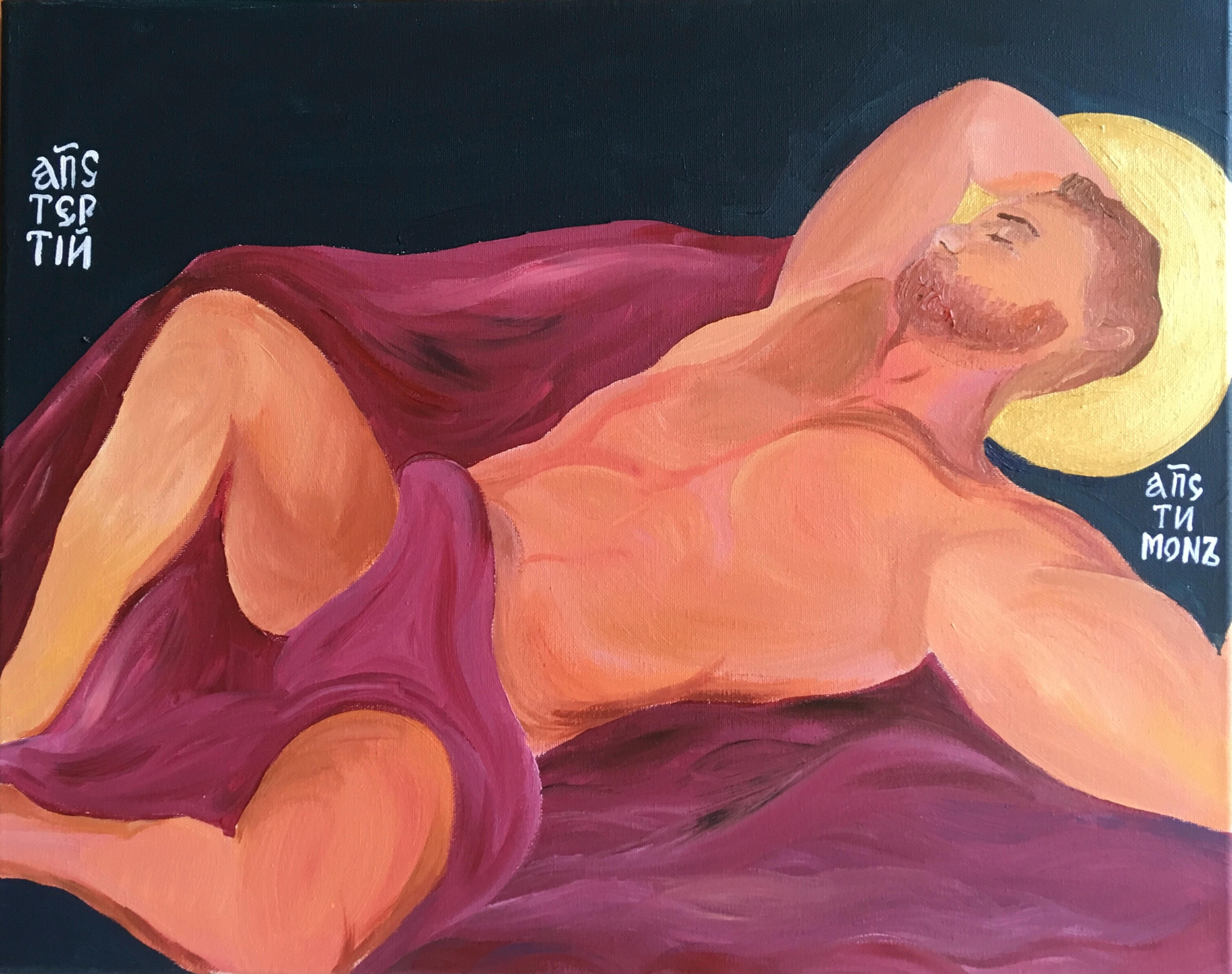
Gay Men and the Orthodox Church is a collection of acrylic paintings completed by the artist in 2019. They are images of LGBTQ+ men in leisure poses, wrapped in blankets, rich in color. They have gold enameled halos and Old Church Slavonic inscriptions around them, indicating that they are sacred beings. The style is similar to traditional Russian Orthodox portraits of saints, also known as the “icon”. Icons can be found at religious sites all over Russia.Ornate images of Jesus and his disciples adorn Orthodox churches all over the Russia. They feature trim silhouettes, chiseled faces with solemn expressions, and golden halos, often painted in actual gold. One can’t help but notice a homoerotic tone present in much of the imagery.Even so, LGBTQ+ individuals in Russia face numerous challenges. Homophobia is a prevailing attitude in many Russian institutions. Western media has attached to this fact, using it to prove superior “tolerance”. This was especially highlighted during the 2014 Winter Olympics. However, in focusing on this aspect of Russian culture, Western media minimizes its own hypocrisy and xenophobia. It downplays the ongoing orientalism of Russian culture by Western audiences.The artist Leung plays with the hypocrisy by featuring heavyset LGBTQ+ men in the paintings, a parody of traditional Russian icons. Usually, those figures are draped in robes. However, the artist has chosen to put the robes on the floor, as if casting down tradition to make room for a more content and relaxed existence.


Red Waters
I portray nude women enveloped by floodwaters. The red palette evokes a mixed reception, of warning, but of intimacy. Women are impacted most by climate change, as they rely on the land and water to sustain their families. As the global south continues to watch their resources decline after years of colonization, land abuse, over-farming, over-production, they have come to know the disastrous effects of unprecedented heavy rainfall uncomfortably well.


I contrast these images with Western ideals of feminism to include narratives of climate change, as necessary and vital to our collective survival. Mainstream American feminism has moved from suffrage to riot culture to a docile gender-alignment with pop political female icons. I argue that catchy phrases like “nasty woman” or “nevertheless, she persisted” leave out a majority of young women, most who are people of color. They have been historically denied agency because of their failure to assume neoliberal positions such as a so-called “boss babe”, a romantic imagination of a female CEO. This boss-babe phenomenon caters to upwardly mobile groups of women in the United States, and both contradicts and undermines solidarity needed to truly elevate climate change ravenged communities and to uplift women in the global south in meaningful ways. The spaces that neo-lib feminism inhabit vary drastically from the global south, plagued already by a tangible climate change. Instead of fighting for increased pay, women all around the world are fighting for their humanity to coexist with the planet.
Graphic Design
Visual identity
Murder She WroteI worked with designer Aldi Ramdan to establish branding for a duo female book review site.
Cute Little Paper BlogI worked with designer Aldi Ramdan again to create a logo for a scrapbooking and travel blog.
Dead Dads ClubI worked with designer Ote to create this logo for a visual arts and literature zine and for lifestyle items.
Social Justice Art TeacherI worked with designer Ote again to create this logo for a digital curriculum site.
Graphic Design
Jester's Gone Green is the first place winner of a water bottle design contest. Click here to see the reusable steel water bottle, given to over 3000 students.
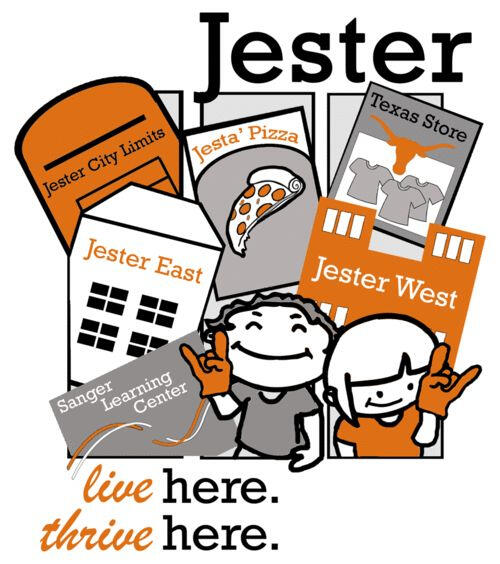
This design was the first place winner of the Jester Dorm Official t-shirt design, given to over one thousand residents in 2011.
San Marcos Wushu is a logo created for a martial arts and dance gym. This is the front and back of a door hanger used in marketing and promotion.
Hiit Fit Gym is a MMA and kickboxing center that offers group workouts. This logo was used in promotional materials.
Hippo Cards is a zero-waste handmade stationery company in the Storenvy Marketplace. Paper bags and recycled materials are used in their playful designs. This logo was used on their website and all packaging materials.
Milto's Greek Cafe
I worked as an in-house designer 2011-2014. These are various promotional items created for Milto’s Greek Cafe in Austin, Texas using Adobe Photoshop.


Jewish Art
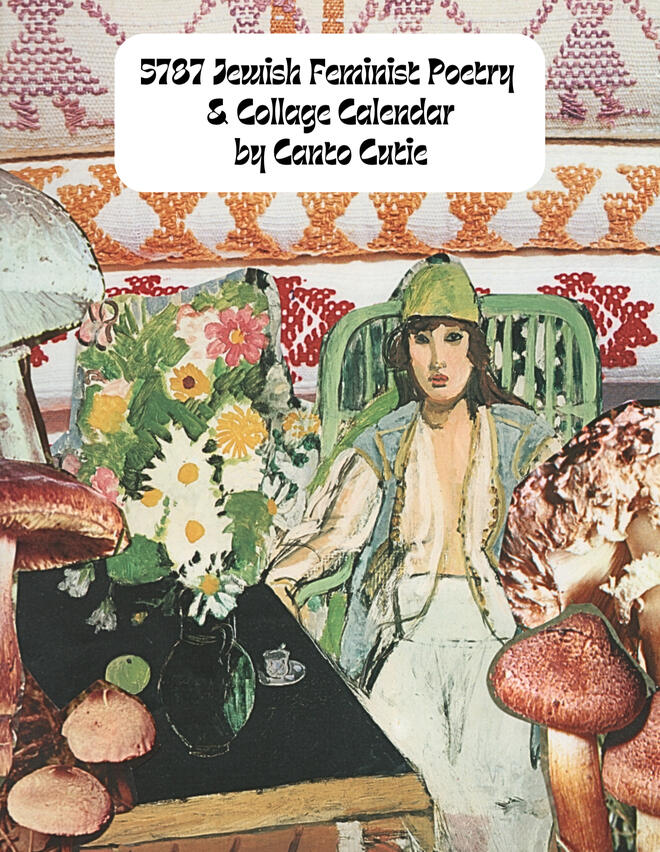
5787 Jewish Feminist Poetry & Collage Calendar Fall 2026I put together a 13 month calendar featuring original collages and poetry from Bridges.
Radical Jewish Calendar Art Feature | Fall 2026My artwork is featured in the Radical Jewish Calendar for the month of Cheshvan.The Radical Jewish Calendar is organized by Jewish month, layering Jewish and Gregorian dates, astrological happenings, holidays, and political history. Twelve months of political art, culture, and history made by dreamers, artists, and organizers who want to know what time it is.Link coming soon
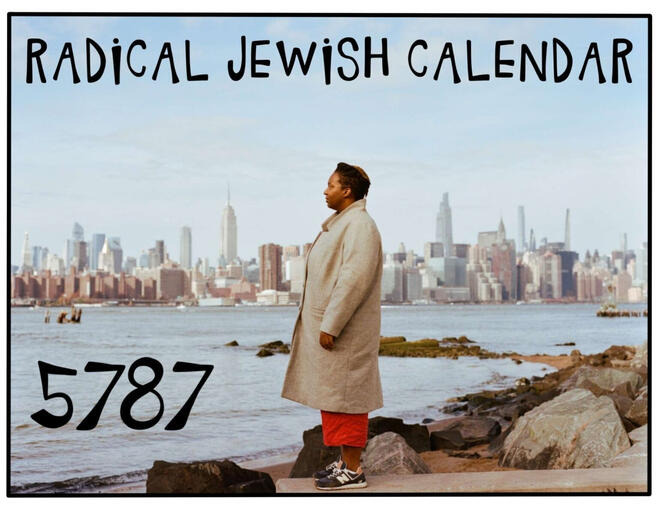
Signal Fire Radical Jewish Artist Co-op Curating & Proofreading Committee | Spring 2026I helped curate the artwork the 5786 calendar and proofread every page with a team of radical Jews.Link coming soon
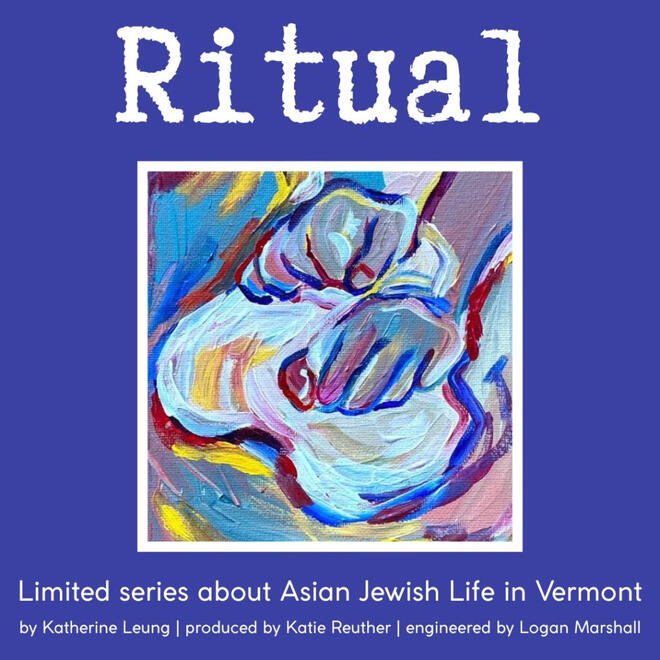
Ritual: Asian Jewish Life in Vermont Podcast | Summer 2026Ritual is a 6-episode podcast featuring oral histories from 12 Asian-Jewish families in Vermont. I collected these stories during my time as a Vermont Folklife Community Fellow. This project took 1.5 years to complete. Feature on Vermont Public RadioLink
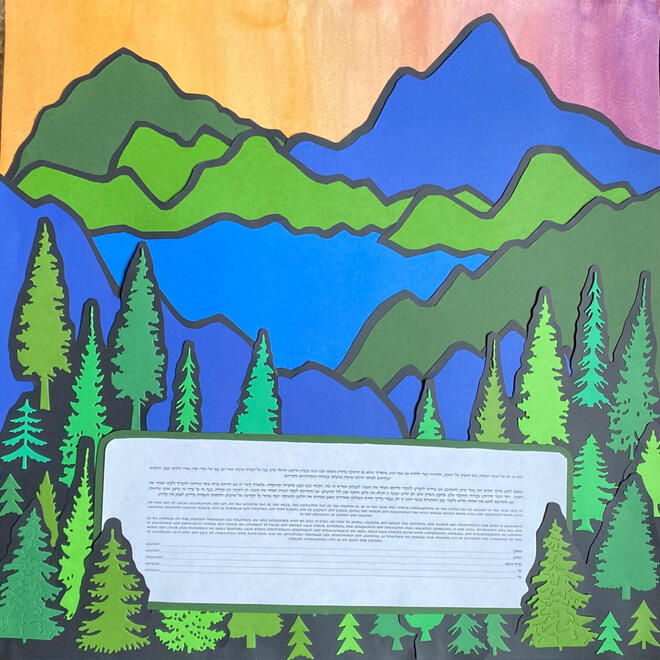
Ketubah Commission | Fall 2025I created a papercut ketubah for a queer Vermont wedding.
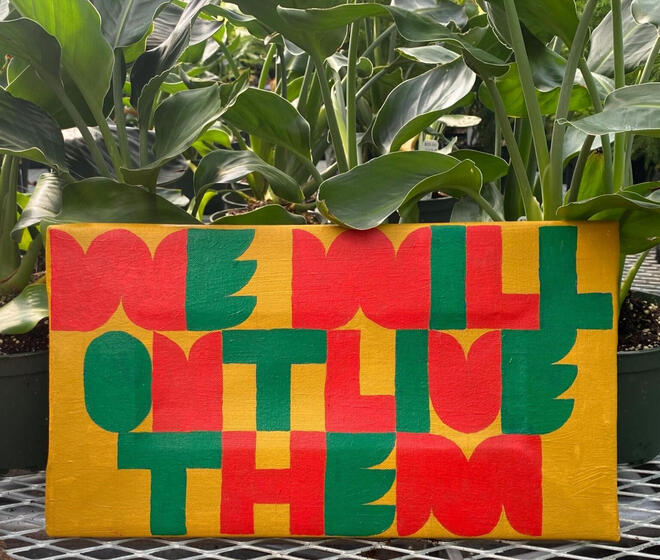
Radical Jewish Calendar Art Feature | Fall 2025My artwork is featured in the Radical Jewish Calendar for the month of Shevat.The Radical Jewish Calendar is organized by Jewish month, layering Jewish and Gregorian dates, astrological happenings, holidays, and political history. Twelve months of political art, culture, and history made by dreamers, artists, and organizers who want to know what time it is.Link
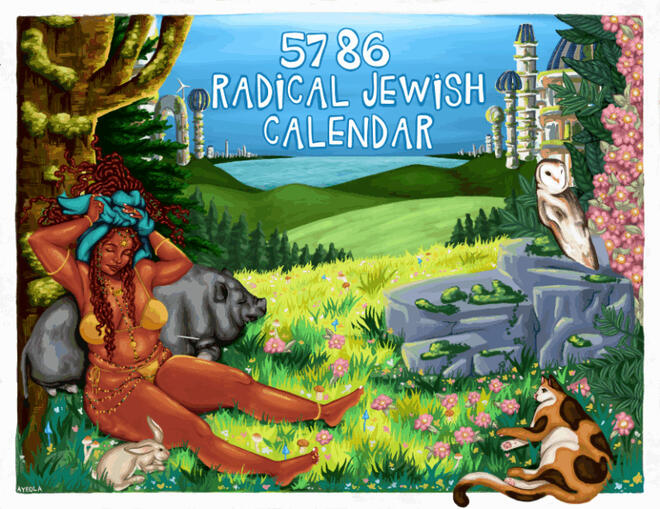
Signal Fire Radical Jewish Artist Co-op Curating Committee | Spring 2025I helped curate the artwork the 5786 calendar with a team of radical Jews.Link
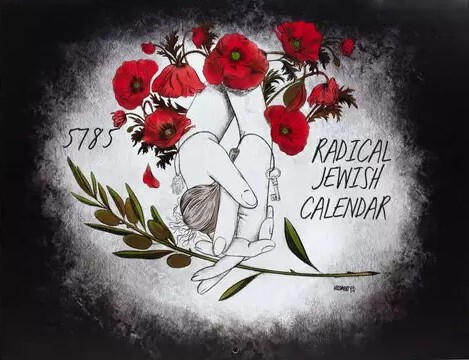
Radical Jewish Calendar Curating Committee | Spring 2024I helped curate the artwork the 5785 calendar with a team of radical Jews.Link
Vlasdina's Desolate Library Podcast Reading | Spring 2024I read a short essay I wrote about the Jewish love for debate in this podcast episode.Link
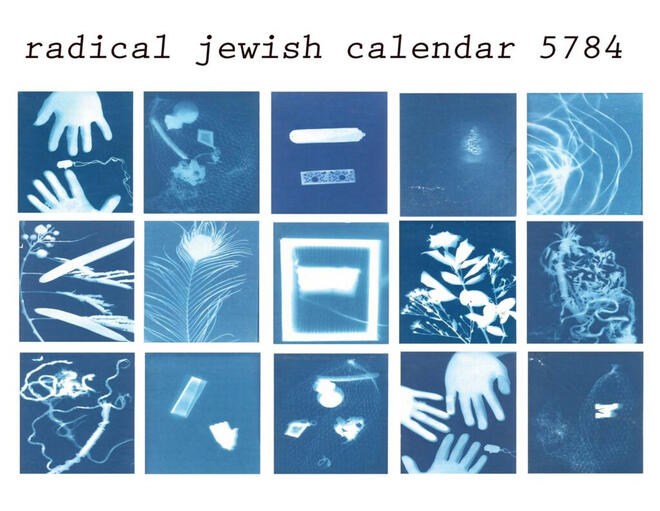
Radical Jewish Calendar Curating Committee | Spring 2023I helped curate the artwork the 5784 calendar with a team of radical Jews.Link
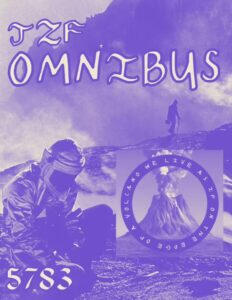
Jewish Zine Fest Omnibus Zine Essay | Summer 2023My essay about the Jewish love for debate was published in Jewish Zine Fest Omnibus Zine 5783 by the Jewish Zine Archive.Link
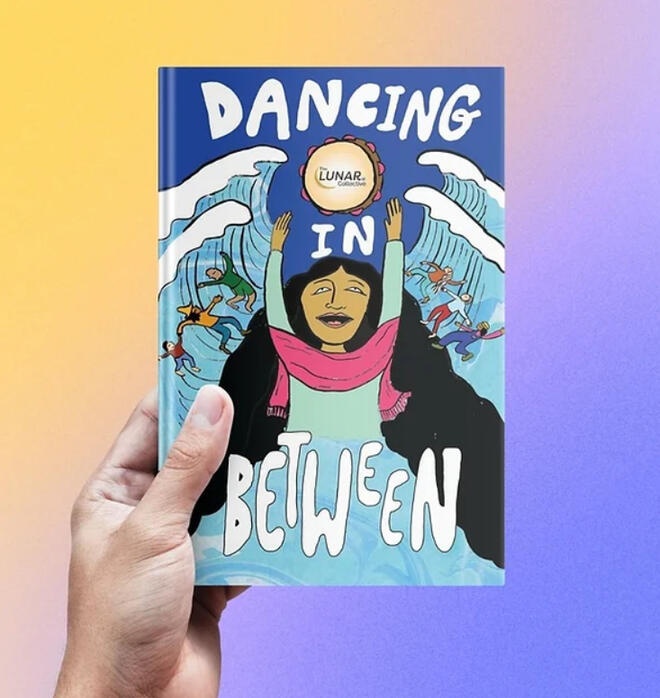
Lunar Haggadah Spread Design | Spring 2023I was the spread designer supporting a team of seventeen Asian Jewish volunteers.Link
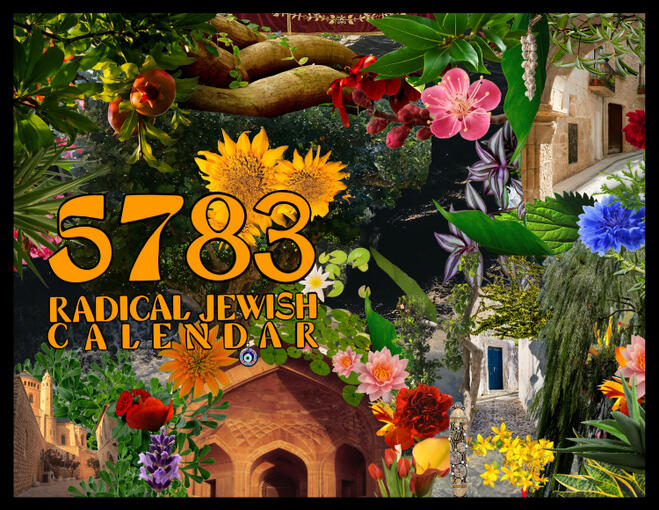
Radical Jewish Calendar Curating Committee | Spring 2022I helped curate the artwork the 5783 calendar with a team of radical Jews.Link
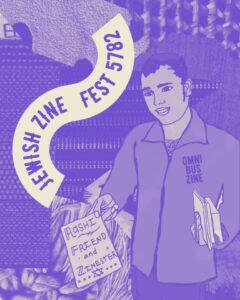
Jewish Zine Fest Omnibus Zine Art Feature | Summer 2022Two works from my Seder series were published in the Jewish Zine Fest Omnibus Zine 5782 by the Jewish Zine Archive.Link
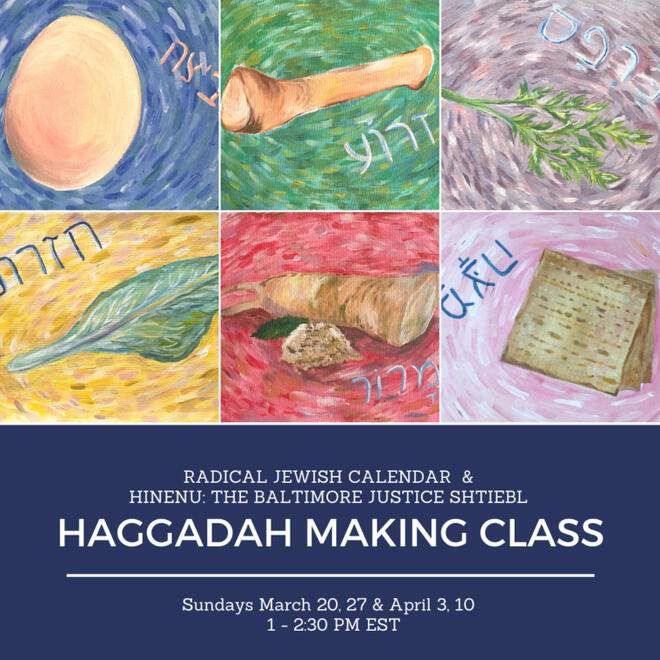
Haggadah Making Workshop at Hinenu Baltimore Justice Shtiebl | Spring 2022Join Rabbi Ariana Katz (she/her) of Hinenu: The Baltimore Justice Shtiebl and artist Katherine Leung (she/her) of the Radical Jewish Calendar for this 4-part, hands-on, interactive workshop to learn more about the history of haggadahs in Passover and how to create one of your very own.Link
Interleaved: A Talmudic Podcast Interview | November 2021I spoke about my artwork in the Radical Jewish Calendar for Interleaved podcast.Hadran Alach Mesekhet Rosh Hashanah! Since the modern period and beyond, the communal creative practice of calendar making, which our Tractate has mainly focused on, has mostly left us — but not entirely.Link
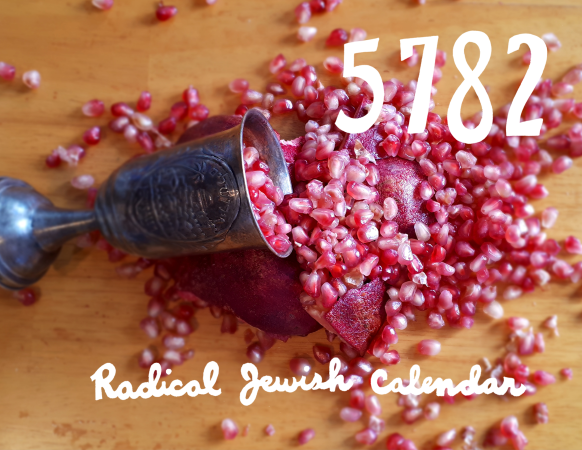
Radical Jewish Calendar Art Feature | Fall 2021My artwork is featured in the Radical Jewish Calendar for the month of Av.The calendar is organized by Jewish month, layering Jewish and Gregorian dates, astrological happenings, holidays, and political history. 13 months (it's a Jewish leap year!) of political art, culture, and history made by dreamers, artists, and organizers who want to know what time it is.Link
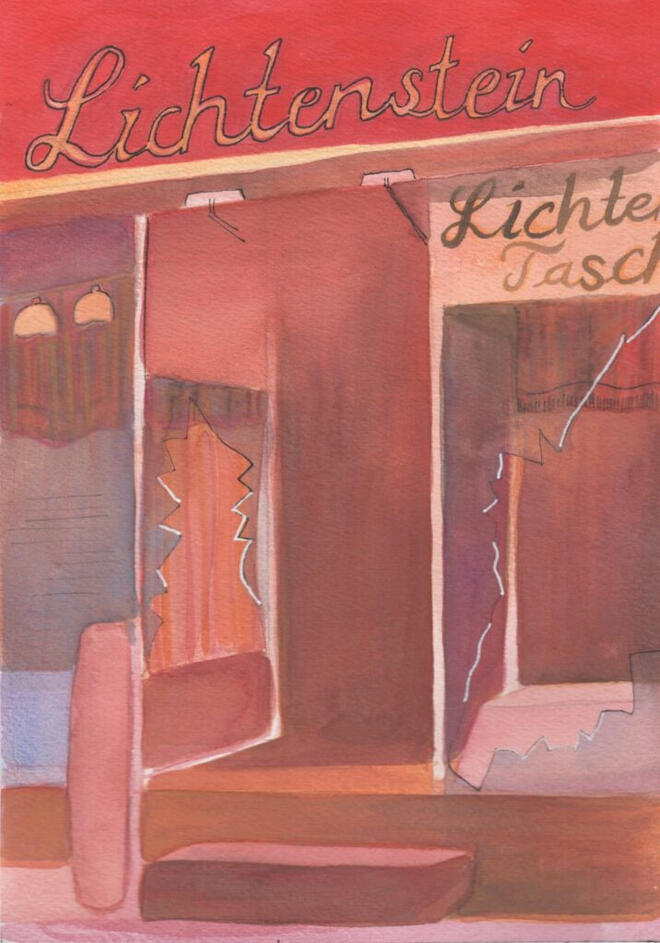
Dead Reckoning Launch Party by Art Music Lit Space Sacramento | October 2021I gave an artist talk about my series Kristallnacht at the Dead Reckoning virtual launch party, hosted by Art Music Lit Space Sacramento.Recording
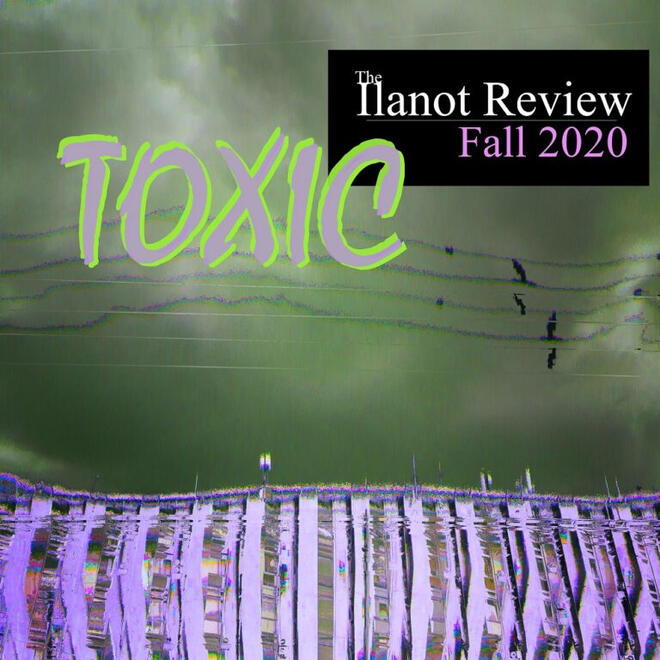
Toxic Launch Party by the Ilanot Review | October 2020I gave an artist talk at the launch party as my painting Worker Hands was featured on the back cover.Recording
Jewish cookbook reviews for Lossi 36 | 2020-2024I reviewed Jewish diasporic cookbooks and academic literature during the four years I served as Editor at Lossi 36.Link
Biography
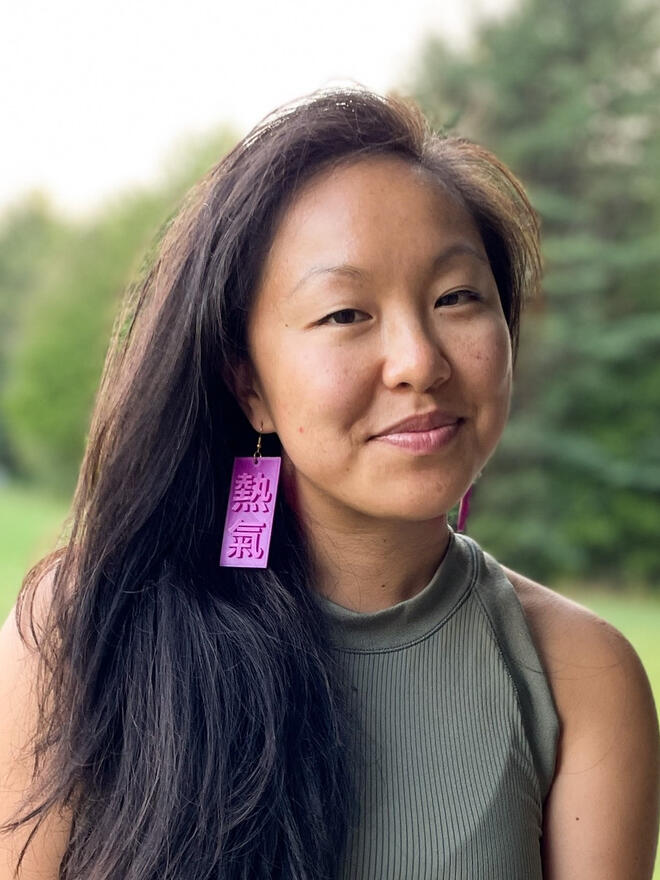
I am an artist in Vermont, but my artwork has brought me many places.I learned to paint under the sunsets of Tucson, Arizona, and the wide open cloudless skies of Austin, Texas. The optimism of eternal summer and the magical realism of the American Southwest desert influences my warm palette.In every place that I’ve lived, I’ve used art to ask questions about identity, family, and culture. I’ve noticed that who I am is fluid. It shifts according to my geography. I carry with me everything I have learned from the places I’ve been and my family history.I’m invested in shared nostalgia and notions of a collective. Whenever I create a new body of work, I build a home for myself and everyone that is important to me.Photo by Benjamin Aleshire
Artist CV
Fellowship
Community Fellowship, Vermont Folklife Center, February 8, 2025 – May 31, 2026
ArtsLead National Leaders of Color Fellowship, Creative West, December 21, 2024 – July 22, 2025
Creative Community Fellowship, National Art Strategies, May 24, 2023 – January 11, 2024
Residency
Summer Teacher Residency, Cleveland Institute of Art, July 19 – 29, 2019
Awards
Vermont Arts Council – Artist Development Grant, 2025
Queerlective – BIPOC Artist Exchange and Activation Initiative, 2024
Vermont Arts Council – Artist Development Grant, 2023
Curatorial Work
2027
Coming soon: Zines of Northern New England for Milton Artists' Guild
2022
Eastern Walls: Street Art Exhibition with three photographers for Lossi 36, March 25 – June 25
2021
Kalmyk Contemporary with twelve artists for Lossi 36, November 26 – February 2
Fables, Fairytales, and Feminism with five artists for Lossi 36, May 10 – August 10
Homecoming: Crimean Tatar Folk Artistry with five Tatar artists for Lossi 36, February 10 – May 10
2020
Red & White Belarusian Protest Art with fifteen artists for Lossi 36, September 1 – February 1
Solo Exhibitions
There is Magic in Simply Existing, Center for Arts and Learning, Montpelier, October 6 – November 18, 2023
Red Waters, Blood Root Gallery, Vancouver Island, March 20, 2021
Faces of Central Texas, Asian American Resource Center, Austin, October 4 – December 18, 2018
Seelected Group Exhibitions
2026
Art of the Coop, Milton Artists' Guild, Milton, September 2 - 28, 2026
Outside the Lines, Earth and Salt, Burlington, September 12
2025
Annual Art Auction and Fundraising Gala, Looky Here Greenfield, Magpie Pizzeria, Greenfield MA, October 13 – December 13
Grand Opening Fundraiser, Vermont Creative Works, Morrisville, October 4
Brushstrokes of Friendship: Linda Oakes Carvalho & Katherine Leung, The Cup and Leaf, Essex Junction, April 1 – May 20
2024
There is Magic in Simply Existing, Nomad Coffee, Burlington, May 29 – July 20
2023
Kavkaz People and Flora, Nusantara, Essex Junction, October 11 – January 13
Asana, Laughing River Yoga, Burlington, October 31 – January 2
Hooked in the Mountain, Green Mountain Rug Hooking Guild (online), November 18
Flood Relief Fundraiser for New Farms for New Americans, Burlington (online), August 21 – September 6
Faces & Places, Sparrow Art Supply, Middlebury, July 20 – September 2
2022
Historic Swanton, Swanton Historical Society and Swanton Public Library, Swanton, June 24 – October 19
Black Flannel Brewery, Essex Junction, August 3 – October 7
Barrel Room at Black Flannel Brewery, Essex Junction, June 7 – August 3
KAPWA: Communal Spirit, Asian Photo Review x Mata Art Gallery at Avenue 50, Los Angeles, April 30 – July 2
Nest Coffee Shop, Essex Junction, April 29 – June 23
2021
Office of Matt Little, South Hero, October 27 – March 4
Town Hall, Milton, September 8 – October 26
The (Anti) Valentine Show, Works, San Jose (Online), February 14
2020
Merkadito Pasko, Mata Art Gallery, Oakland (Online), November 22 – January 31, 2021
Dead Reckoning, Art Music Lit Space, Sacramento (Online), October 15 – November 13
For Mr. Floyd, Ms. Taylor… A Memorial Exhibition, Works, San Jose (Online), June 19 – September 4
In Search of Self, Found Space, Singapore (Online), May 15
Virtually Feminist, City College SF Collective, San Francisco (Online), May 1
Windows Into the World, Chico Art Center, Chico (Online), May 11
Century of Humanity, Cre8worlds, Los Angeles (Online), May 3
Quality Time, Mata Art Gallery, Oakland (Online), April 20 – July 31
Dot Dot Dash, Surface Gallery, Nottingham (Online), April 17
2019
Spooky – Halloween Art Show, Japantown, San Jose, October 27
Summer Teacher Residency Exhibition, Cleveland Institute of Art, June 29 – July 12
May the Fourth, Classic Loot, San Jose, May 4 – July 4
The 90’s, Bubble Pop Gallery and Temblor Brewing Co., Bakersfield, April 5 – May 10
Pink Lady, Ironbark Ciderworks, Claremont, March 16 – April 14
Place Setting, Politits Art Coalition at The Yards Collective, Rochester, March 1 – 21
5th Annual Mujer – Eres International Art Exhibition, B & E Art Studio, Brownsville, March 16 – 29
Bridging the Gap, AIR Gallery, Brooklyn, February 8 – March 10
A Midwinter Night’s Dream, Recluse Arts, Sacramento, February 8
Unity in Diversity, Works, San Jose, January 25 – February 17
2018
Naleza, Leiminspace, Los Angeles, November 8 – 11
Japantown Art Walk, Classic Loot, San Jose, June 15
Summer Splendor, Round Rock ArtSpace, Round Rock, June 9 – July 27
Manitas in Action, The Movement Gallery, San Antonio, March 17 – April 2
Gallery for Broken Hearts, Code and Canvas, San Francisco, February 14 – 20
The (Anti) Valentine Show, Works, San Jose, February 2 – 18
2017
YOU ARE HERE, Wild Basin Creative Research Center, Austin, April 10 – May 27
Hive Mind, Super Rad Art Collective at Jerry’s Artarama, Austin, April 7 – May 30
2014
Art Auction, Art & Soul, Austin, March 25
Publications
2026
Boreal Zine, Interstitial, Issue 23
Zine of the Hill 4 by Long Arm Stapler
2023
Zine of the Hill 3 by Long Arm Stapler
Passionfruit, Volume 2 "Growth"
Show Me Yr Selfie by SM Piotrowski & EA Hayes
2022
50 for 50 Zine by Daniel Noonan
Coffee Chat Zine by Yolie Contreras
2021
Overachiever Magazine, April Issue
Asian American Arts Zine, Volume 4, March
2020
Asian American Arts Zine, Volume 3, December
Quaranzine II, Third Estate Art
Zine Fest Houston Compilation, We're Broadcasting Seeds, Baby!
Ilanot Review, Volume 20, Fall, Toxic
Chachalaca Review, Volume 7, Spring
Curious Magazine, Summer, The Queer Issue
Rigorous Magazine, Volume 4, Issue 2
Asian American Arts Zine, Volume 1, July
2019
Almost Real Things, Austin, Top 10 Artists to Watch, April 2019
Polemical Zine, Toronto, Issue 7, Ugly
2018
Silk Club Magazine, Austin, Volume I, QUIET!
Folk Magazine, Australia, Volume I
Artist talks
2026
Vermont Edition, June 25
Creative Guts Podcast, June 3
2025
What Kind of Asian Are You? Podcast, April 18
2024
Zine workshop, Education Justice Coalition of Vermont, October 19
Long Arm Stapler Podcast, October 1
Governor's Institute of the Arts, June 29
Vlasinda's Desolate Library Podcast, April 26
2023
Poetry and art workshop, Deborah Rawson Memorial Library in Jericho, November 4
Art workshop, Community Farm Days: Meat, Greet, and Eat at Maple Wind Farm in partnership with Interlace Commons, Land Care Learning, and New Perennials in Richmond, October 22
2022
Building Communitea Podcast, September
Zines in the Bay Podcast by Mela Seyoum
Women Womenpreneurs Summit, June 8
2021
Interleaved: A Talmudic Podcast, November 14
2020
Dead Reckoning Launch Party, October 15, 9 pm
#IlanotReviewToxic Launch Party, October
Cleveland Institute of Art Alumni Talk, August 5, 3 pm
Chachalaca Review Launch Party, UT Rio Grande Valley, June 20, 6-8 pm
Virtually Feminist Screenside Chat, CCSF Collective, May 1, 6-8 pm
2018
"Storied", Asian American Resource Center, Austin, October 4, 6–8 pm
Awards
2026
North Country Public Radio Artist of the Week
2020
Back Cover Artist, Ilanot Review, Volume 20, Fall 2020, Toxic
Featured Artist, Mata Art Gallery, AAPI Heritage Month
Cover Artist, Rigorous Magazine, Volume 4, Issue 2
2018
Honorable Mention, Adult Category, Graphic Novel Contest, San Jose Public Library
2011
1st place H2O Water Bottle Design, University of Texas
1st place Jester T-Shirt Design, University of Texas
2010
1st place University of Texas College of Education Mascot Design, University of Texas
2009
3rd place Advertising and Design, SkillsUSA
3rd place Texas Pin Design, SkillsUSA